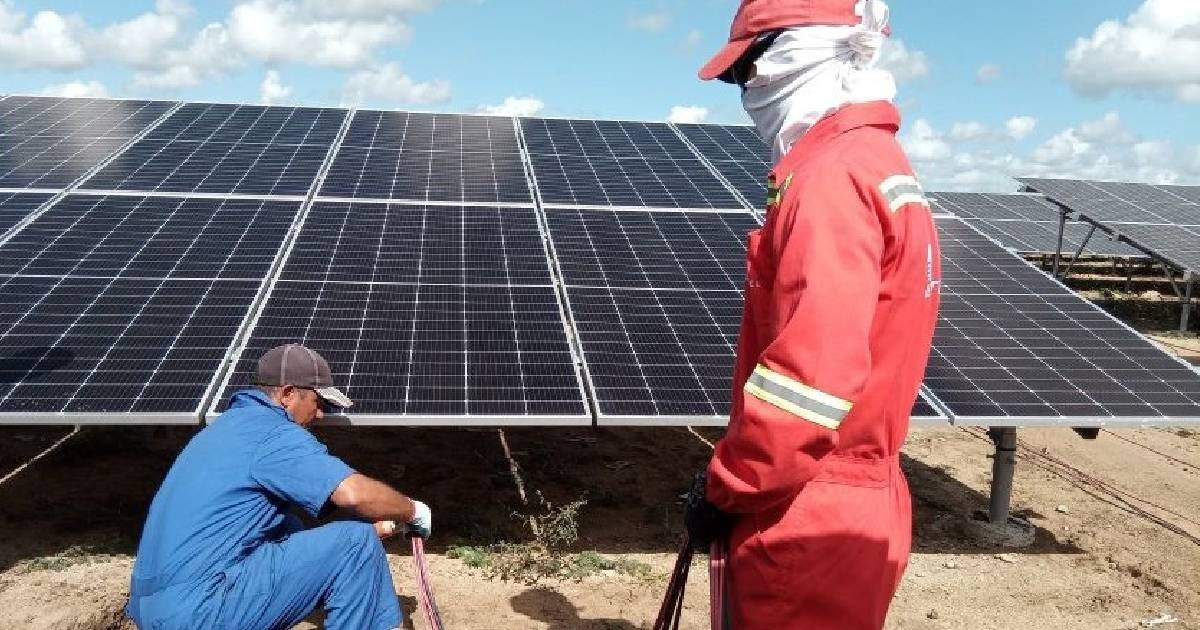
A worker from ETECSA in Santiago de Cuba publicly reported the vandalism with stones against the solar panels of the photovoltaic system installed in telephone cabinet number two of Reparto Flores, located in the yard of the School of Arts and Crafts.
The images accompanying the report published on Facebook show a stone on the photovoltaic panels mounted on an elevated metal structure, surrounded by barbed wire and cyclone fencing.
Luis Enrique Torres Almarales, the author of the publication, labeled the event as vandalism: "It couldn't be clearer; we are witnessing a pure act of sabotage, a malicious action aimed at causing harm and damage to the little we can achieve for the benefit of society."
On May 30, four solar panels from cabinet number one in Reparto Flores were stolen, leaving a telecommunications node without energy backup. What distinguishes this new incident is the method: instead of stealing the equipment, the culprits chose to destroy it with stones.
This escalation is part of a series of attacks that have impacted ETECSA's infrastructure in Santiago de Cuba throughout 2026. On May 1st, a panel from the Integral Cabinet micro 9-2 was stolen, rendering the energy backup useless for more than 560 users of landline service and Nauta Hogar.
On June 6, four panels disappeared from cabinet number three in Reparto Micro 7. And by mid-month, a wave of thefts and sabotage left three radio bases out of service, following the cutting of cables and the removal of breakers.
In August, Santiago de Cuba was identified as one of the provinces with the highest incidence of energy infrastructure thefts across the island.
Torres Almarales emphasized that "For many, losing a solar panel does not just mean losing a simple piece of equipment; it means losing their savings, their projects, their aspirations, and above all, returning to the uncomfortable darkness."
The context surrounding these attacks is the worst energy crisis Cuba has experienced in decades. With blackouts in 2026 leaving nearly three-quarters of the country without electricity simultaneously, the photovoltaic systems installed in telecommunications cabinets have become the only backup to maintain phone and internet services during outages.
These devices, imported with considerable financial effort, hold high value in the informal market, making them a frequent target.
The Supreme People's Tribunal issued the Opinion 475 in May 2025, instructing the courts to qualify these acts as sabotage, with penalties ranging from seven to 30 years in prison, life imprisonment, or the death penalty in the most severe cases.
Related videos:
Filed under: