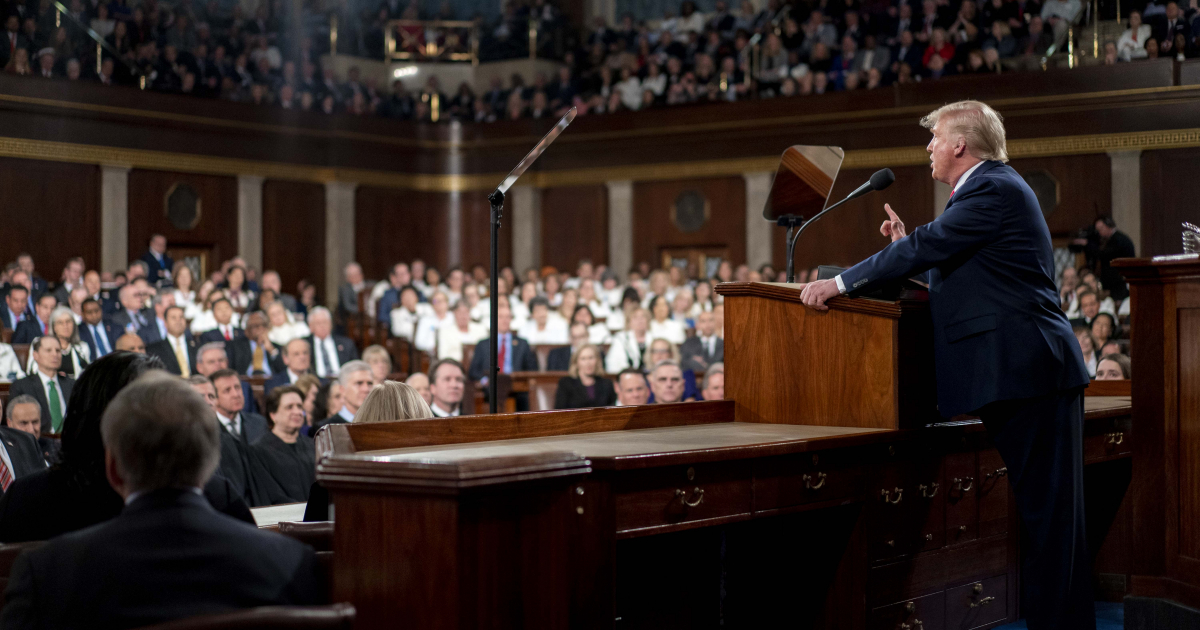
Americans are heading to the polls this Tuesday for a midterm election that will determine control of Congress during the last two years of Donald Trump's presidency, which is shaping up to be the first national verdict on his administration.
The elections come at a time of significant strain for the Republican president. His approval rating has fallen to a historic low of 31%, according to a Reuters and Ipsos poll, driven by discontent over the cost of living, gasoline prices exceeding four dollars per gallon, and the unpopular war led by Washington against Iran, which 69% of Americans believe has not been worth it.
To take control of Congress, the Democrats need a net gain of four seats in both the House of Representatives—where Republicans hold a majority of 218 to 214—and in the Senate, where the Republican advantage is 53 to 47. The aggregator Decision Desk gives the opposition an 80% chance of regaining the House and a 57% chance of also winning the Senate.
The latest polls from the New York Times and Siena, published on Sunday, show Democratic candidates leading in six key Senate states: Michigan with an eleven-point advantage, Texas with seven, Maine with six, Ohio and Kansas with five, and Alaska with two. Iowa is in a statistical tie.
In light of this challenging scenario, Trump concluded the campaign with 28 events in 31 days and raised over 277 million dollars through his super PAC MAGA Inc. for television advertising and direct mail. Businessman Elon Musk allocated approximately 366 million dollars to support Republican candidates throughout the electoral cycle.
Trump himself urged his supporters to go out and vote "as if my name were on the ballot," aware that history is not on his side: recent presidents have lost seats in the midterms, a trend he experienced himself in 2018.
If the Democrats regain one or both chambers, Trump warned that he would systematically wield his veto power. “I guess I will become ‘Mr. Veto’”, he stated in an interview with Fox News on Sunday. “You have a president who doesn’t control the House or the Senate; they send proposals, you veto them, and eventually, after a month or two of vetoing everything, they come close, and you strike a deal,” he added. Overriding that veto would require two-thirds of the votes in both chambers, a threshold that the Democrats would hardly reach on their own.
The results of the elections will have direct consequences for Trump's policy towards Cuba. The president promised on October 31 that "no Castro will remain in power" when his term concludes, setting a timeline of "two and a half years." Secretary of State Marco Rubio has described Cuba as a "priority" and called on internal sectors to collaborate with the CIA to promote political changes on the island.
Since January 2026, Washington has sanctioned more than 40 entities and at least 38 individuals linked to the Cuban military, energy, and financial sectors, and has intercepted at least seven tanker ships, effectively reducing Cuba's crude oil imports. With a Republican majority in Congress, Trump would have more leeway to intensify this pressure or explore more coercive options. With a Democratic Congress, he would face investigations and a coalition of 32 lawmakers who have already called for a change in policy towards Cuba and warned against any military intervention.
The Cuban Chancellor Bruno Rodríguez Parrilla responded that "the Cuban Government will withstand the pressure campaign regardless of how long it takes," a stance the regime has maintained in the face of each escalation from Washington.
Related videos:
Filed under: