
Related videos:
Doctor in Science María Eugenia Toledo Romaní, a researcher at the Institute of Tropical Medicine "Pedro Kourí" (IPK), stated that it is currently not possible to make a long-term forecast about the behavior of chikungunya in Cuba, as this is the first experience of exposure to the virus that is causing a large-scale epidemic.
The scientist's statements were published by the state media Cubadebate, in connection with a broadcast of the Mesa Redonda dedicated to the evolution of arboviruses in the country.
During her presentation, Toledo Romaní explained that her focus would be on adding international evidence and national data to clarify what can be expected regarding this disease. In that regard, she specified that although we had reports of chikungunya back in 2015 in Santiago de Cuba, it has not manifested in the magnitudes and behavior that we are currently observing.
The specialist added that, unlike dengue—where forecasts can be made based on its endemic-epidemic behavior and accumulated data—with chikungunya, only short-term predictions can be made, and it is not possible to determine when the epidemic wave will end.
Toledo Romaní pointed out that the epidemic is not exclusive to Cuba, as between 2020 and 2024 more than 119 countries and territories across the six regions of the World Health Organization reported outbreaks of chikungunya. However, he warned that the national context presents specific risk factors, such as a high population susceptibility due to not having had a previous emergency, with attack rates ranging from 30% to 70%; an aging demographic structure with accumulated comorbidities; increased internal and international mobility that facilitates the exchange of viruses and vectors; and the simultaneous circulation of other arboviral diseases such as dengue.
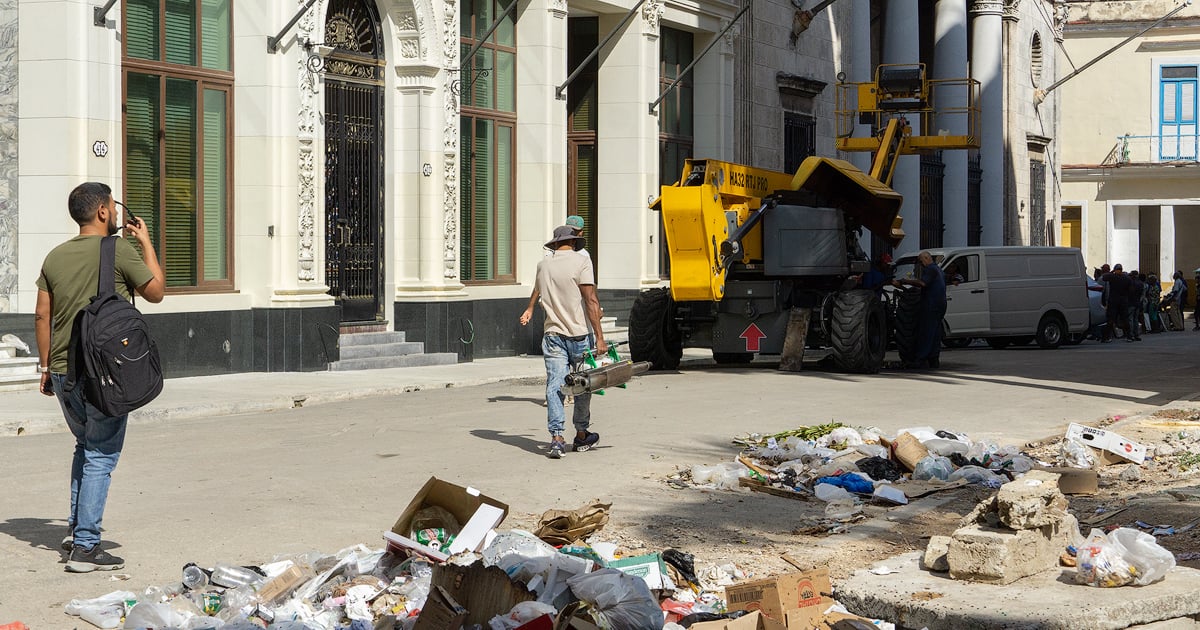
It was also pointed out that there are limitations to the effectiveness of control strategies, such as fumigation —which is not 100% effective—, compounded by socioeconomic, environmental, and urban hygiene factors.
According to the expert, the significant increase in cases in Cuba starting from week 40 of the year is related to the resumption of the school year and the concentration of people in areas infested with mosquitoes. She also predicted that the upcoming outbreaks are likely to be smaller due to acquired immunity, although the widespread population mobility may create isolated pockets that complicate control efforts.
The Ministry of Public Health (MINSAP) recently reported on 33 deaths due to mosquito-borne diseases, of which 21 were due to chikungunya and 12 to dengue, according to official data released by state media. The majority of the victims were minors.
On its part, a report from the Cuban Conflict Observatory (OCC) and the Foundation for Human Rights in Cuba documented at least 87 deaths related to the epidemic, with records from various provinces across the country.
Toledo Romani emphasized the need to seek medical attention for an accurate diagnosis, especially during a period of increased respiratory infections and potential co-infections. He highlighted the importance of monitoring for other diseases that may arise following extreme weather events.
The researcher stressed that monitoring control interventions must be very systematic and continuous, because in these diseases one cannot rely on a single control method. She called for reinforcing environmental hygiene and personal actions at home as part of prevention.
The statements from the researcher at the IPK reflect the uncertainty regarding the behavior of chikungunya in Cuba and the need to strengthen surveillance and preventive measures. With demographic, health, and environmental factors favoring its spread, the end of the current epidemic wave remains uncertain.
Filed under: