
Related videos:
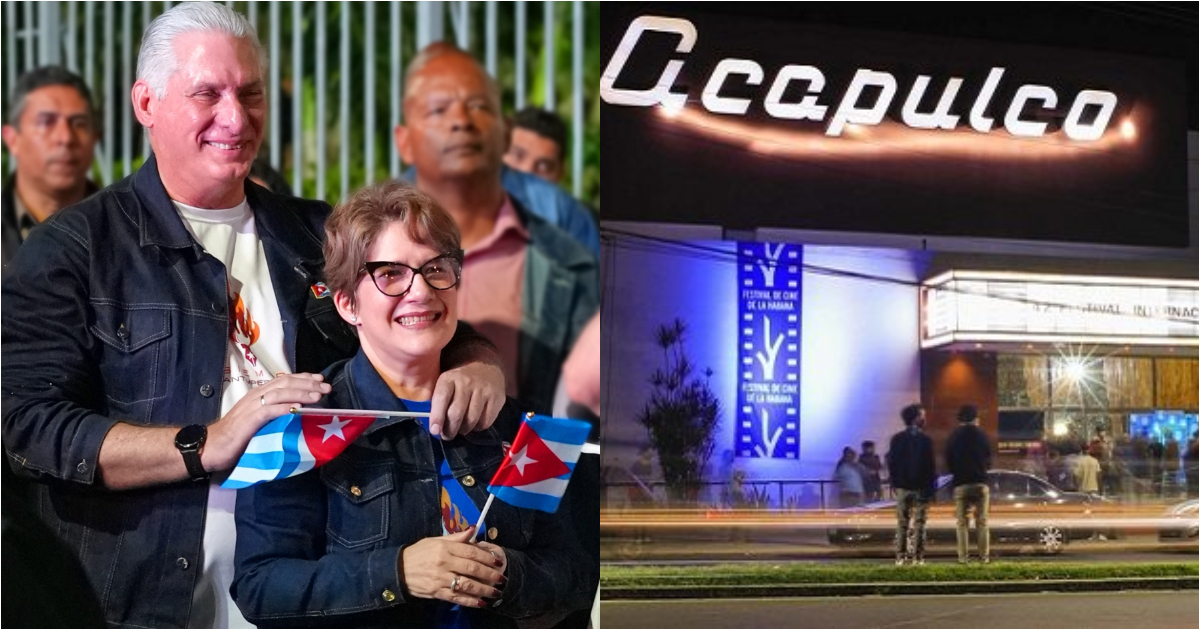
Lis Cuesta defended on social media the celebration of the Havana Film Festival as a “luminous resistance,” despite the country experiencing prolonged blackouts, extreme shortages, and a resurgence of illnesses, which sparked a wave of criticism and outrage.
The wife of the ruler Miguel Díaz-Canel published a message this Thursday on her X account, describing the International Festival of New Latin American Cinema as a demonstration that culture remains “vital for the Cuban people” and a “living bridge to the world,” despite “the complexities of the country.”
He assured that the event received over 2,200 works from 42 countries and that "cinema is luminous resistance."
In his statements, he added that the registrations alone contributed "more than $15,000," funds that, he said, allowed the Festival to continue.
He also stated that there are already generating plants in the cinemas of Proyecto 23 and mobile screens intended for communities "to maintain screenings despite the energy situation."
According to the former First Lady, the efforts of the Cuban Institute of Art and Cinematographic Industry (Icaic) and the organizers demonstrate the country's commitment to "continue creating culture even in difficult times."
The citizen response was immediate and fierce. Users questioned the appropriateness of discussing cultural festivals while hunger, lack of medications, and the blackouts affecting the entire island are on the rise.
“Give food and medicine to the people, no one wants to watch movies,” wrote a user. Others criticized the privileged access of the elites, the disconnection from daily life, and the incongruity of boasting about power plants for cinemas when people have had to bring a portable generator to a clinic due to a lack of power to perform an electrocardiogram.
"Without bread, but with circus. Will the blackouts be in blocks like the power outages?" another commentator sarcastically remarked.
The reactions even pointed to the health situation, characterized by outbreaks of dengue, chikungunya, and an increase in deaths associated with diseases that were previously considered manageable.
For many users, it is offensive that the Government promotes a cultural festival while Cuban families struggle with increasingly severe shortages.
"The people are dying of hunger and you're talking about cinema," pointed out another comment that encapsulates the widespread tone of indignation.
Most messages agreed that the government's celebratory discourse contrasts sharply with the daily experience of millions of Cubans for whom life has become a constant struggle to obtain food, medicine, and electricity.
The start of the International Festival of New Latin American Cinema, this December 4th, comes preceded by the rejection of the documentary "Para Vivir," about Pablo Milanés (1943-2022), despite its international journey, a gesture that its creator Fabien Pisani attributed to the ongoing cultural censorship in Cuba.
In the latest edition of the event, the film "To Kill a Man" was censored, by young filmmaker Orlando Mora, who is also a victim of an act of institutional violence.
Divorce between official narrative and reality
Cuesta's words clearly expose the divide between the official narrative and the material reality of the country.
Talking about "luminous resistance" and a "bridge to the world" while the population cooks with charcoal, searches for nonexistent medications, and buries family members due to preventable diseases highlights a profound disconnection.
It is not just a simple communication error; it is a demonstration that the elite operates from a parallel reality where culture serves as a political cover.
The insistence on presenting the Festival as a symbol of cultural vitality seeks to project a sense of normalcy and institutional continuity.
However, it's important to emphasize that the event took place with only 15,000 dollars and relies on generating plants, which reveals a precarious situation rather than strength. It is an acknowledgment that nothing operates without improvisation and patchwork solutions.
The civic reaction goes beyond mere insults; it indicates a buildup of emotional fatigue.
Cuesta has become a figure that catalyzes resentment towards privilege and the indifference of power. Each of his messages is perceived as a provocation, a reminder of the widening gap between the rulers and the ruled.
At its core, his speech is not naïve: it aligns with the official doctrine of presenting culture as a moral stronghold.
But in a country engulfed in an energy, health, and economic collapse, that rhetorical resource no longer holds sway. Rather than reinforcing the government's legitimacy, it exposes it. Each such statement accelerates the loss of trust and reveals the deterioration of a narrative that no longer has anything to cling to.
Filed under: