
Related videos:
Still in shock over its potential implications, the Cuban regime continues to react to the new Presidential Memorandum on National Security (NSPM-5) signed this Monday by U.S. President Donald Trump.
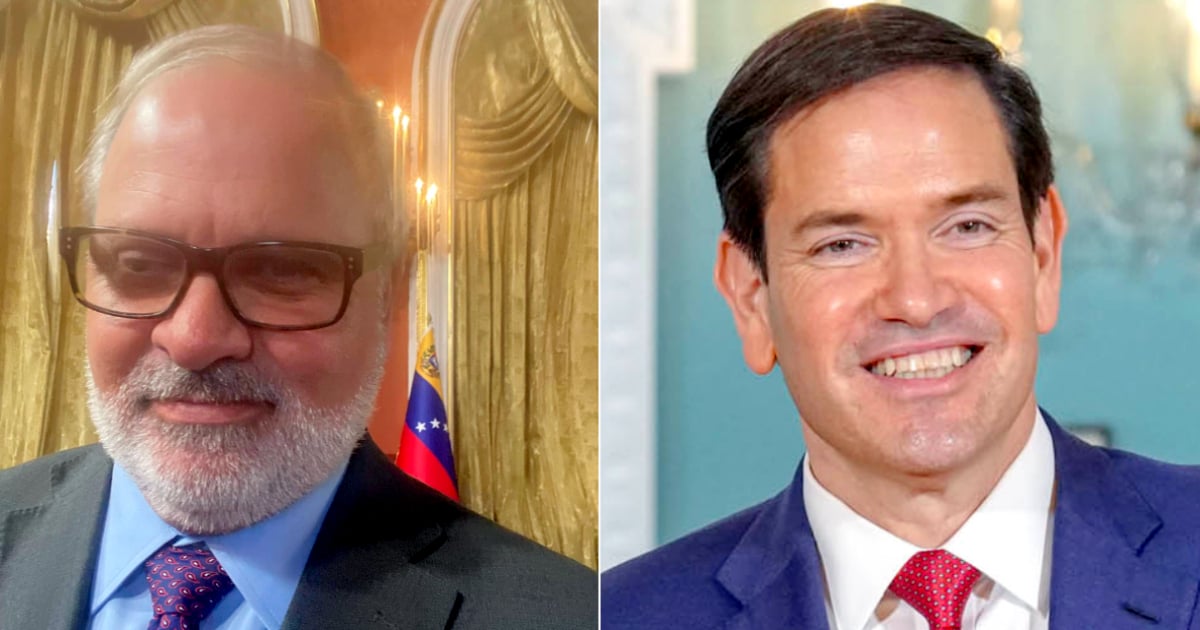
From Havana, the General Director for Latin America and the Caribbean at the Ministry of Foreign Affairs (MINREX), Eugenio Martínez Enríquez, quickly stepped forward to denounce the new shift in U.S. policy toward Cuba, stating that it contains "several contradictions."
In a post on social media, Martínez Enríquez sarcastically commented on the fact that the United States talks about promoting more freedom and democracy in Cuba while imposing "restrictions on financial transactions and travel."
But far from representing a contradiction, the logic of the memorandum is clear: to increase the pressure on a totalitarian regime that for decades has curtailed the rights of Cuban citizens, eliminating the real possibility of exercising fundamental freedoms such as expression, association, independent entrepreneurship, or plural political participation.
It is particularly brazen for a high-ranking representative of MINREX to question measures designed to cut the flow of resources to military and intelligence structures like GAESA, the economic conglomerate controlled by the Armed Forces, which holds a significant portion of the national economy, while the Cuban people endure deprivation and high costs.
The accusation of "economic coercion" does not withstand scrutiny when it comes from a regime that for years has used control and dependency as tools of domination.
A state that prevents the development of a truly independent private sector, punishes citizens for attempting to generate wealth outside of state channels, and represses even the slightest expression of dissent is not in a moral position to speak about freedoms.
The memorandum signed by Trump, which reissues and modifies the NSPM-5 from 2017, reaffirms the willingness of the United States to support the Cuban people, not the government that represses them. The measures are not aimed at hindering the lives of the citizens, but at weakening the structures that oppress them.
The promotion of free internet, support for independent media, the encouragement of private enterprise, and the tightening of control over covert tourism are steps aimed at fostering citizen autonomy in the face of an omnipresent and abusive State.
Martínez Enríquez, as the spokesperson for the Cuban regime's diplomatic apparatus, resorts to a narrative of resistance that collapses under the evidence of a country that has been hijacked by a kleptocratic elite. An "elite" that has impoverished and alienated the population, caused the largest migratory exodus in its history, and refuses to acknowledge its failures and the citizens' disaffection in order to remain in power.
In Cuba, there is no separation of powers or independent institutions. All power is concentrated in a single party that has eliminated democratic checks and balances, ruling through control of the armed forces, intelligence agencies, state media, and repressive apparatuses.
In that context, the measures promoted by the United States, far from being incoherent, respond to a clear strategy: there is no possibility of democratic transition in Cuba without external pressure.
The regime has not shown a willingness to open up but rather a persistent escalation of repression against peaceful protesters, artists, independent journalists, and any form of civic organization.
The freedom that Washington defends is neither abstract nor conditional. It is the possibility for Cubans to live in a country where their rights are respected, where they can start businesses, protest, vote, and be elected, without fear of repression or exile.
That freedom will not be possible as long as the regime keeps its apparatus of control, propaganda, and repression intact, along with the mechanisms that finance it.
What the United States is ultimately proposing is a roadmap towards a Cuba where free, multiparty elections are held, with participation from all sectors of the country and the exile community. A Cuba where the future is not held hostage by a ruling elite that enriches itself at the expense of millions.
Calling that a "contradiction" is, at best, a clumsy attempt to manipulate the discourse. At worst, it is yet another display of the arrogance of those defending the indefensible: the perpetuation of a failed and repressive system that denies Cubans the right to be free and coexist with their differences, protected by the rule of law in their own land.
Filed under: