
Related videos:
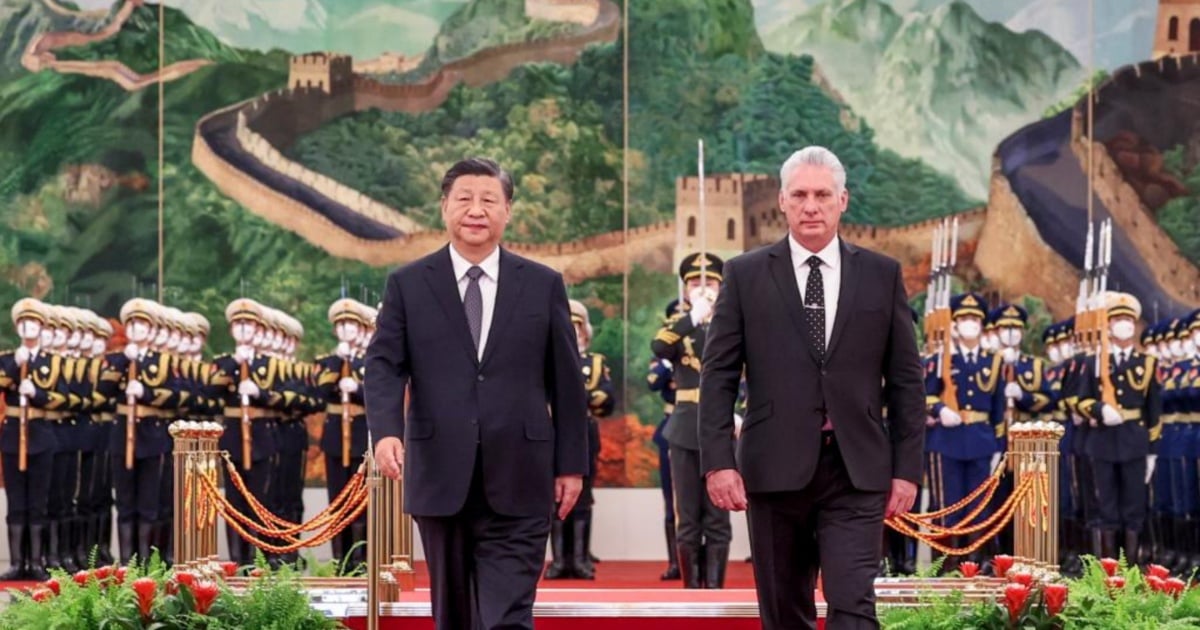
The Cuban leader Miguel Díaz-Canel Bermúdez announced today the start of an official tour of his Asian allies Vietnam, China, and Laos.
Díaz-Canel said on X that these are "sister nations united by deep ties and a history of shared cooperation and solidarity, tested by time and the greatest challenges. We will keep you informed."
The leader will participate in the events commemorating the 80th anniversaries of the proclamation of independence and the founding of what was then the Democratic Republic of Vietnam, as well as the victory in the Chinese People's War of Resistance against Japanese Aggression and the World Antifascist War, reported the Presidency of Cuba
During his stay in these countries, he will meet with his counterparts "to promote the development of bilateral cooperation in all cases, the implementation of existing agreements, as well as to accelerate the joint construction of the Community of Shared Future Cuba-China," the official information specifies.
Accompanying Díaz-Canel are Bruno Rodríguez Parrilla, Minister of Foreign Affairs; Emilio Lozada García, member of the Central Committee and head of its International Relations Department; and Oscar Pérez-Oliva Fraga, Minister of Foreign Trade and Foreign Investment.
In the midst of the structural crisis faced by Cuban society, this tour is sure to become yet another plea for help from Havana to its allies.
This week it was reported, for example, that in Vietnam a solidarity campaign for Cuba raised a donation of 14 million dollars in just a few days.
The campaign, which will run until October 16, reflects the strength of diplomatic ties between both countries, but it also highlights how the Cuban regime clings to the narrative of international solidarity, despite the fact that millions of people on the island face extreme poverty, collapsed hospitals and a constantly deteriorating quality of life.
This 2025, Díaz-Canel has turned his international tours into a diplomatic escape from reality. In May, he traveled to Russia, where he met with Jinping and raised a toast at a while bread was being rationed on the Caribbean island.
Shortly after arriving in Belarus, in the midst of the energy collapse on the island, to gift Lukashenko cigars, rum, and commemorative t-shirts, symbols of an authoritarian friendship that doesn't brighten even a light bulb in Havana.
Now, the itinerary takes him to China, a country with which the Cuban regime has strengthened its military and political ties in recent years, amid increasing reports about the presence of Chinese espionage facilities on the island.
Frequently Asked Questions about Díaz-Canel's Tour of Asia Amidst the Cuban Crisis
What is the purpose of Díaz-Canel's tour of China, Vietnam, and Laos?
The main goal of Díaz-Canel's tour is to strengthen bilateral cooperation and promote the development of existing agreements with these allied countries. During the visit, he will also participate in celebrations of historical anniversaries in Vietnam and China. However, criticism is focused on the fact that this trip occurs amidst a structural crisis in Cuba, where the population is facing severe economic and social difficulties.
Why is Díaz-Canel's tour considered an attempt to escape Cuban reality?
The tour is seen as a diplomatic escape because while Díaz-Canel travels and participates in international events, the internal situation in Cuba is critical, with prolonged blackouts, food shortages, and a collapsed infrastructure. These tours often coincide with moments of acute crisis on the island, which generates discontent among the population who see their leaders seeking support abroad without improving internal conditions.
How has Vietnam's solidarity with Cuba manifested?
Vietnam has demonstrated its solidarity with Cuba through a donation campaign that has raised over 14 million dollars. This campaign reflects the strength of diplomatic ties between both countries and is intended for medical supplies and essential goods for Cuba. However, this international solidarity stands in stark contrast to the reality on the island, where an economic and social crisis persists.
What criticisms does the Cuban regime face regarding its relationship with China?
The Cuban regime faces criticism for strengthening its ties with China, a country that has been accused of having espionage facilities on the island. Furthermore, this approach is seen as an attempt to gain support without making significant internal reforms. The alliance with China is presented as an alternative to American dominance in the region, but it is also viewed as an ideological reaffirmation at a time of international isolation.
Filed under: