
Related videos:
Cuba is a land of music. From West to East, artists emerge who embrace the flavor and color of Cuban music, and our interviewee hails from the eastern region, specifically Santiago de Cuba.
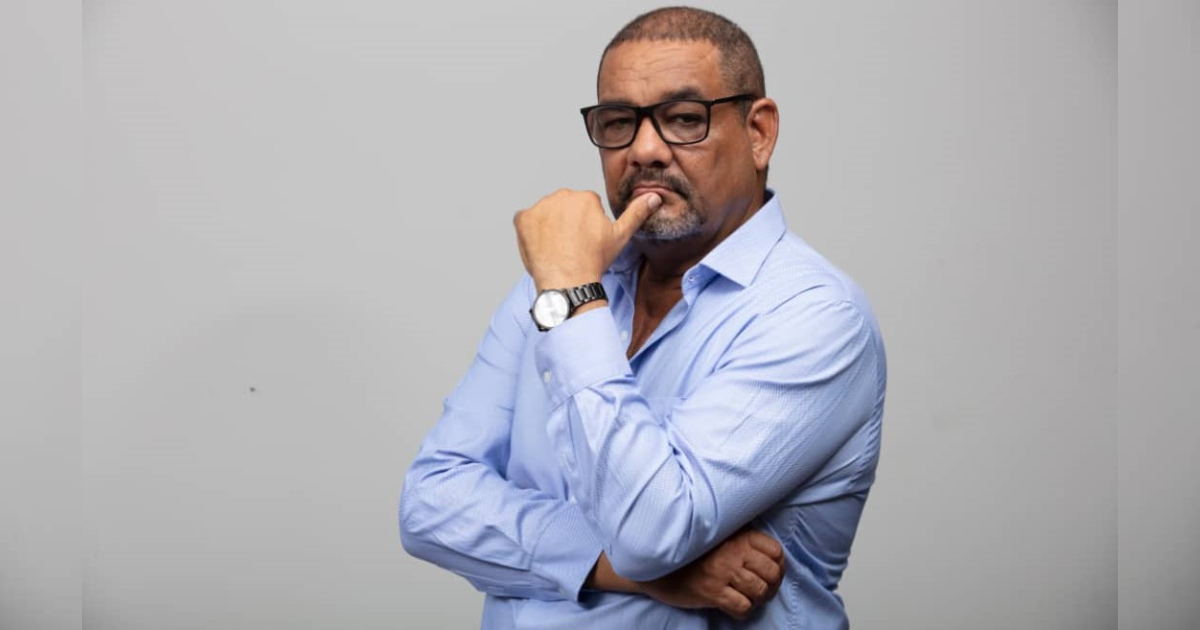
Heir to a lineage of giants is Angelito Bonne, one of the most prominent figures in traditional and popular Cuban music, known for his dedication to preserving the rhythms and roots of his country's musical culture.
Throughout his career, he has managed to connect with several generations, bringing Cuban son and other traditional genres beyond the island's borders.
Today we have the pleasure of speaking with him to delve into his life, learn what he is currently doing, and explore the direction of his professional career.
Angelito's beginnings in his hometown of Santiago
I was born in 1961. The first time I stepped onto a stage, I was five years old. I remember it as if it were today; it was at Parque Céspedes in Santiago de Cuba, with Los Tambores de Enrique Bonne, my father.
At the age of nine, I began studying clarinet at the "Esteban Salas" conservatory, but due to my age, I had to switch to piano until I turned 11. This turned out to be beneficial because it brought me closer to the piano, which I love; that instrument is in my genes. My paternal grandmother was a concert pianist and piano teacher at the Orbón Academy.
What mark did that legendary figure, Enrique Bonne, leave on you? Was it a burden or a driving force?
My father has been very important in my history. He is a leading figure in our music. Enrique Bonne was an influential composer, percussionist, and orchestra conductor; a fundamental figure in 20th-century Cuban popular music, especially regarding rhythmic fusion and the evolution of son and dance music.
With him, I learned about a world. For many, my father is regarded as an innovator of Cuban music, especially for his contributions in creating new rhythms and his role in the development of popular and dance music in the 1950s and 1960s; a pioneer in the fusion of Afro-Cuban, Caribbean, and modern rhythms, and a bridge between tradition and musical modernity in Cuba.
In my case, besides my father, I cannot help but mention someone who was pivotal for me, even though he wasn't famous. I am talking about my uncle Pedro Julio Sánchez, my mother's brother, who gifted me my first clarinet.
He was a saxophonist at Tropicana, and on a trip he took to Santiago, he took me to take my entrance exam for school.
You were part of a generation that contributed significantly to Cuban music.
Of course, I belong to a generation that grew up full of dreams and hopes, a generation I take pride in. Personally, my passion is music and I had the privilege of taking classes with a prestigious faculty, both in Santiago and at the ENA and ISA in Havana. My generation had that privilege in all artistic expressions, including music.
Angelito, there is very little left of that generation you speak of in Cuba.
That's right, unfortunately. Nowadays, a large part of my generation and the subsequent ones have either already emigrated or are in the process of doing so. This is something I have expressed in meetings and have also mentioned when I have had the opportunity to speak with individuals in positions of influence in the cultural sphere.
Cuba has become an involuntary donor of talent. Highly capable individuals are trained and then find themselves in the necessity to emigrate.
There is now a serious economic situation. I don't mean to say that there was ever a good one, but it was better; however, for example, there was never an infrastructure that allowed musicians – the group I can speak about – the possibility of making choices.
In my case, what I enjoy the most is dedicating myself to concerts in theaters; however, I had to "die" with the folk dances and the carnivals. It's not that I have anything against those artistic expressions, but they weren't part of my plan.
And I return to the topic: many talented people are trained, graduate, and cannot find a place to channel all their potential. And there, alongside the economic problem, lies emigration.
The economic aspect is crucial, as it is true that everything revolves around money. However, there has perhaps not been a vision or understanding of the phenomenon that involves analyzing each of us on a case-by-case basis—something that would not have been difficult, considering the characteristics and aspirations of each individual.
Perhaps in the effort to popularize culture, some consequences were not anticipated. Yes, the right and opportunity to develop within a manifestation is valid, but what happens afterward?
Why do we all have to play and sing in dance music? Why can't we choose?
Angel Bonne's family
I have been with my partner María Victoria Talavera for 17 years, a woman from Matanzas whom I love and respect. I have two children: the eldest, due to circumstances in life, does not carry my last name. His name is Ernesto Salinas and he lives in Lehigh, Florida, USA. The second one you know, Cami. That little one you saw being born has turned into a 23-year-old young man and is the drummer for Alexander Abreu and Havana D’Primera.
Well, "like father, like son," right?
Hahaha, that's right. He also has an orchestra and is part of a jazz quartet called Los Mulatos; in other words, he never stops. He looks like his father when he was young. As for me, I no longer live in El Cerro. A year ago, I moved to Santos Suárez, the same neighborhood as the great Celia Cruz and Pupy Santiago, so I’m overflowing with rhythm and flavor everywhere.
Instrumentalist, singer, or director?
What can I say, Julita? I'm primarily a clarinetist. Then I added the saxophone, flute, and piano, which has always been a part of my life. I should tell you that percussion was my first instrument, but my father forbade me from playing it because it would hinder my clarinet and piano playing.
The Modern Music Orchestra was my first experience in the professional music world, led by Osmundo Calzado. With the support of Aldo Medina and Enrique Acosta, two excellent saxophonists from that orchestra, I was able to learn a great deal.
Once, we were going to accompany a singer named Miguel Chávez, who was very famous in Cuba at one time, but had been living abroad for years.
We rehearsed in the morning, but in the evening, Chávez was affected, and we had to play the entire repertoire in a different key, almost sight-reading. Can you imagine how much those and other similar situations help in your training, how much they push you?
After those beginnings with the Orquesta de Música Moderna, you have traveled many paths, as Joan Manuel Serrat sings. I know about your collaborations with Síntesis and Irakere, your albums with Laronte and Amaury, but I imagine that your time with Van Van holds unforgettable moments in your heart, since not everyone can say they were part of the Cuban Music Train directed by a great like Juan Formell.
Uff...! And I mean it. My story with Los Van Van began when I was introduced to Formell in 1982, when I explained to him that I had what he needed, as Tosco had left for Irakere and I understood that Van Van needed a soloist in line with the alternative direction the orchestra was taking in relation to the landscape of Cuban dance music.
A bit bold of you, don't you think? You really "went for it"!
Well, yes, but it didn't backfire on me. Obviously, he wanted to see what I would do, and I told him that he had already heard me because on the day of my graduation from the ENA, my dad invited us to "Las Cañitas" at the Habana Libre hotel, and we took Oriente López, who had accompanied me on a piece.
My dad played for Formell and Nicolás Reinoso the live recording he had made of our version of “El danzón de Alamar,” by Chucho Valdés, and Formell was very impressed.
Time passed, and in 1989, he invited me to join the orchestra. It was a learning experience for me to be able to compose, orchestrate, and sing in the most important band in the history of dance in Cuba.
And what did you do between 1982 and 1989?
I did many things. I had the opportunity to work with the master Ramón Huerta in his group Galaxia, a work that proved to be significant in everything that followed in my professional life.
Because, in addition to being able to play the excellent music of Huerta and collaborate with very talented musicians such as Diego Valdés, José Miguel Greco, Miguel Ángel de Armas, Issac Delgado, Paulo FG, Felito Hernández, Néstor Lombida, Héctor Arcos, among others, I had the opportunity to accompany great artists like Omara Portuondo, Luis Carbonell, Elena Burke, and Malena.
I was also part of the group that accompanied the great singer-songwriter Santiago Feliú and the magnificent singer Beatriz Márquez.
Then, in 1989, my story with Van Van began, and I performed on stage alongside Formell, Pupy Pedroso, Changuito, Pedro Calvo, Samuel, Mayito “El flaco”, Hugo Morejón, Mayito Rivera, and others.
You once had an orchestra; why go solo now?
I had an orchestra from 1996 to 2008, but it was very complicated because the musicians were constantly changing. I don't judge them: for ethical reasons, first and foremost, but the truth is that it became very difficult to achieve the project I envisioned at the right level.
The first thing is that I have always wished, as I already told you, to do theater concerts, but that possibility did not exist (at least at that time), as there was a lack of economic infrastructure that would allow me to make a living from theater concerts.
This led to my dreams not being able to materialize, and in order to keep the group together, I had to do the same as everyone else: Café Cantante, Palacio de la Salsa, La Cecilia, the carnivals, etc.
And that was not my plan! Life showed me that I was right. Without knowing it, an audience formed around my music in other countries, where there are musicians who play my repertoire and accompany me.
What is Angelito Bonne currently doing?
I live off my international work and the royalties generated by my music. The venues include La Tropical and the Casas de la Música, but now there are many private spots as well. Today's nightlife mainly unfolds in private bars.
Angelito, just a few days ago someone made a discriminatory comparison between Celia and Benny. Did you hear about it, what do you think?
I believe that comparing young artists to Benny, Celia or other legends is more of a publicity stunt than anything else; moreover, in all the arts, there are eras, trends, and rhythms. Times change, and the audiences are different, and I think comparisons are pointless and unnecessary.
If someone compared you to Benny, what would you do?
If someone compared me to Benny, I would thank them and then tell them to go to hell… Hahaha
Speaking of Celia Cruz and Benny Moré, who do you consider to be other greats of popular and traditional Cuban and world music?
I would say that alongside those immeasurable figures are Miguelito Cuní, Oscar de León, Paulina Hernández, Rubén Blades, Mayito Rivera, Tito Gómez, Ismael Rivera, Rolo Martínez, Cascarita, Tania Pantoja, and others.
Do you feel fulfilled?
I don't think I would ever feel accomplished because my goal is the journey and there is always music to be made.
How would you like to be remembered, considering the affection the people have always had for you?
I would like to be remembered as someone who loved his people, his land, and who always acted with respect and affection.
Filed under: