
Related videos:
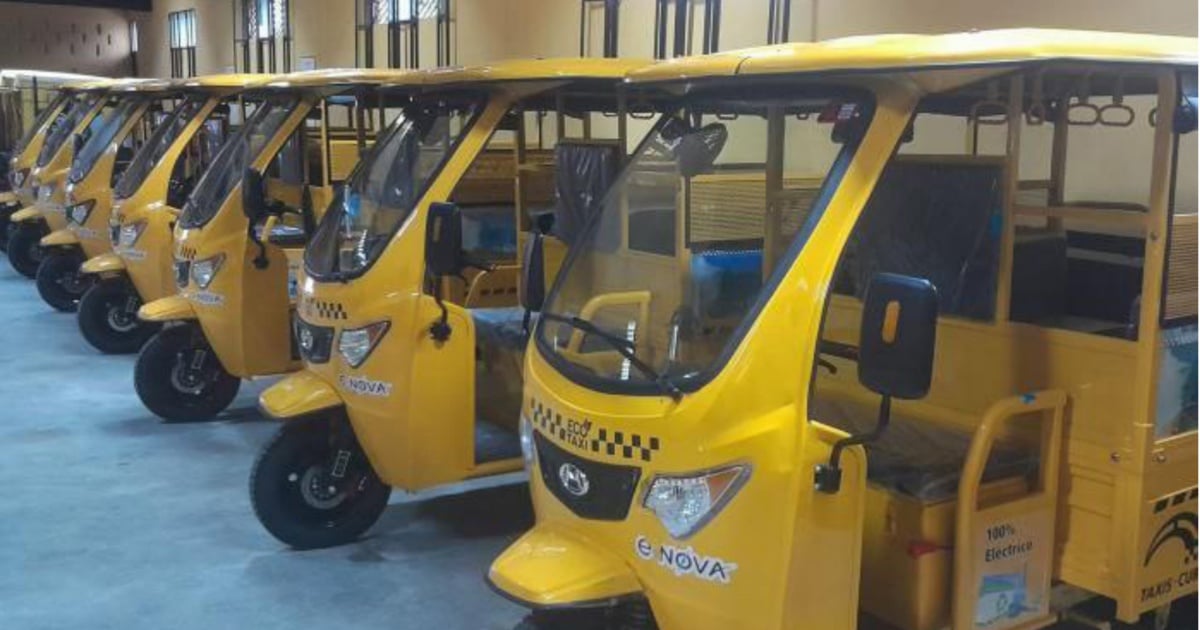
The Cuban regime will allocate 15 electric tricycles to strengthen the precarious urban transport in Camagüey.
The tricycles will be used in peripheral areas due to "the low availability of buses," reported the Cuban News Agency (ACN).
The vehicles, with a capacity for six people, will be allocated to three routes (five tricycles each): Railroads Building-Los Pinos, Railroads Building-Villa Mariana, and Marriage Palace-La Yaba.
The service hours will be from 7:00 a.m. to 1:00 p.m., and from 3:00 p.m. to 5:00 p.m., with a price of five pesos in national currency.
The Cuban Minister of Transport, Eduardo Rodríguez Dávila, stated that these are means of short distance travel with a lower impact on the environment.
The official also stated that they are working, at a national level, on the installation of charging stations powered by renewable energy for these tricycles
Last July, Camagüey received and put into operation 10 gazelles (microbuses) that cover two routes in the capital of Agramonte.
Tricycles: solution or stopgap
At the end of July, the regime introduced 15 electric tricycles in the city of Manzanillo, which Rodríguez Dávila presented as a step forward in urban mobility, despite the fact that the measure will only affect two routes and does not address the serious connectivity issues that the municipality faces.
Although in his statement the minister celebrated the "popular acceptance" of these vehicles in other provinces, he also acknowledged that they do not address the overall transport deficit.
The measure, then, seems more like an attempt to mask the scarcity with small symbolic deliveries than a structural change with real impact.
Tricycles, in addition to not meeting a massive demand, remain caught in a collapsed energy system, lacking sufficient support to ensure the constant charge they require, which compromises the sustainability of any electric transport in Cuba.
Under these conditions, its operation seems destined for inconsistency and improvisation.
In Havana, the park of electric tricycles for public passenger transport exceeds 150, distributed across different routes.
Since August 15, 2024, the cost of transportation in electric tricycles in the capital has increased to 10.00 CUP per passenger. This decision, announced by the General Directorate of Transportation of Havana, marked a significant rise from the initial price of 4.00 CUP set when the service began in 2020.
The new price aimed to align the rate in Havana with that of other provinces in the country, where the rate was already 10.00 CUP, according to a note from the official daily Granma.
However, the energy crisis also negatively impacts this service, as the constant power outages prevent the optimal charging regimen for the vehicles.
Under these conditions, keeping electric transportation operational becomes increasingly unfeasible, and tricycles are no exception.
The Transport official on Facebook mentioned last year that in the various provinces where tricycles operate, "they have been very well received by the population and, although their presence does not resolve the transportation deficits, it allows us to provide a service that generates high acceptance and at the same time creates employment, often for women.”
Frequently Asked Questions about the Transportation Crisis in Cuba and the Implementation of Electric Tricycles
What are electric tricycles and what is their purpose in Camagüey?
Electric tricycles are vehicles designed to improve urban transport in Camagüey due to the low availability of buses. The Cuban regime has allocated 15 electric tricycles to strengthen the precarious urban transport in Camagüey. These vehicles have a capacity for six people and will operate on three specific routes.
What are the limitations of using electric tricycles in Cuba?
Although electric tricycles are an eco-friendly solution, their implementation is limited by the energy crisis in Cuba. Frequent blackouts hinder the ideal charging regimen for the vehicles, which compromises their operational efficiency and sustainability, affecting their ability to serve as an effective long-term solution.
What is the cost of the electric tricycle service in Camagüey?
The cost of the electric tricycle service in Camagüey is five pesos in national currency per passenger. This price is part of an effort to make transportation more accessible for the population, although its real impact is limited by service constraints.
Why are electric tricycles not a definitive solution to the transportation problem in Cuba?
Electric tricycles do not solve the overall transport deficit in Cuba due to their limited capacity and dependence on a collapsed energy system. Although they provide a mobility option in specific areas, they cannot meet the massive demand needed to alleviate the transport crisis in the country.
Filed under: