
Related videos:
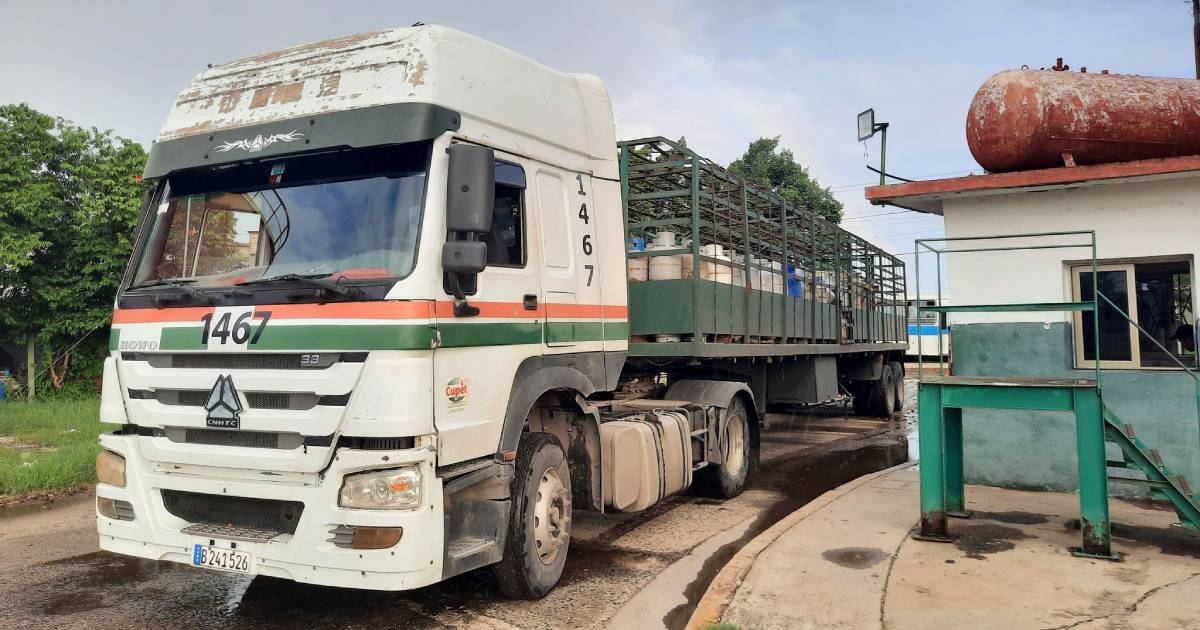
The sale of liquefied gas in Cienfuegos has once again highlighted the hardships the Cuban population faces in accessing a basic resource in daily life. This Sunday, the state-owned company announced that only those with appointments assigned through the Mi Turno app, with dates prior to June 30, 2025, will be able to make purchases.
The announcement, far from conveying security, confirmed what families already know: the distribution of gas in Cuba is a constant ordeal filled with schedules, restrictions, and endless waits. Customers with dates later than that day must resign themselves to continue waiting, with no certainty of when they will be able to supply themselves.
To add more confusion, it was clarified that only since September 8 could those entitled to purchase between July 1 and July 15, 2025 start requesting their appointment, while those scheduled for a date after that fortnight still cannot manage anything. This is yet another example of how access to an essential resource is trapped in a bureaucratic maze without certainties.
The note from the UEB of Fuel Marketing in Cienfuegos also specified that only 150 additional cylinders were made available in the virtual store for delivery on Wednesday, September 17, also under the same condition of delayed shifts. This measure excludes thousands of families who, amidst constant blackouts, rely on gas as the only safe way to cook.
In addition, it was announced that on Tuesday, September 16, there will be collection and distribution in all municipalities of the province, intended only for customers who have not completed their deliveries for the year. This is yet another "quick fix" that highlights the improvisation and inability to ensure stability in the service.
A crisis that repeats itself from province to province
What is happening in Cienfuegos is not an isolated incident, but rather part of a national crisis. In the west, in August, the Liquefied Gas Company resumed distribution in Havana, Artemisa, and Mayabeque after weeks of suspension, but the service was dependent on the timely arrival of a ship at the Ñico López refinery. More than stability, the announcement revealed the country’s reliance on each shipment and the fragility of the system.
In Santiago de Cuba, the situation is even more dire, as CUPET suspended sales just 12 days after they had resumed at the end of August, due to the inventory being depleted. Thousands of families were left without their main fuel source amid blackouts and with no alternatives other than firewood or kerosene, both harmful and dangerous options for health.
In Villa Clara, the company reorganized the sale with a schedule that excludes those who have already purchased three times this year. The supposed "equity" translates into new restrictions for households that must adapt to a rigid system and to inventories that in many locations do not exceed 200 cylinders daily.
Manage scarcity instead of ensuring stability
The official narrative insists on the idea of "equitable distribution," but in practice, it means distributing scarcity. Each province applies its own set of restrictions with closed shifts, limits on annual purchases, exclusion of customers, or abrupt service suspension.
The result is the same, leaving families trapped in a web of uncertainty and precariousness, forced to cook with whatever they can find and to live in constant anticipation of a schedule that never guarantees stability.
In Cienfuegos, as in the rest of the country, the population knows that the next gas sale is not a guaranteed right, but rather a test of endurance against scarcity. The ongoing crisis of domestic fuel continues to impact the lives of Cubans, with official announcements that repeat like a memorized script, but provide no real solution to the problem.
Frequently Asked Questions about the Liquefied Gas Crisis in Cuba
Why is there a shortage of liquefied gas in Cuba?
The shortage of liquefied gas in Cuba is due to financial and logistical issues. Delays in payments to international suppliers prevent the unloading of ships arriving in the country, a situation worsened by economic sanctions and dependence on timely imports. Additionally, national production is insufficient to meet demand.
How does the liquefied gas crisis affect Cuban families?
The liquefied gas crisis forces Cuban families to resort to unsafe cooking methods, such as wood or kerosene. This occurs in a context of frequent blackouts and a shortage of basic resources, increasing the precariousness of daily life in Cuban households.
What measures is the Cuban government taking to address the gas shortage?
The Cuban government has implemented an equitable distribution system that, in practice, means sharing the scarcity. Restrictions have been established on the number of cylinders that can be purchased, and distribution schedules have been created that prioritize certain groups, although these measures have not structurally resolved the crisis.
What is the impact of gas scarcity on the Cuban economy?
The shortage of liquefied gas has a significant impact on the Cuban economy, increasing social discontent and precariousness. The reliance on imports and the inability to ensure a stable supply reflect broader issues in the country's economic management, affecting both the daily lives of citizens and essential productive sectors.
Filed under: