
Related videos:
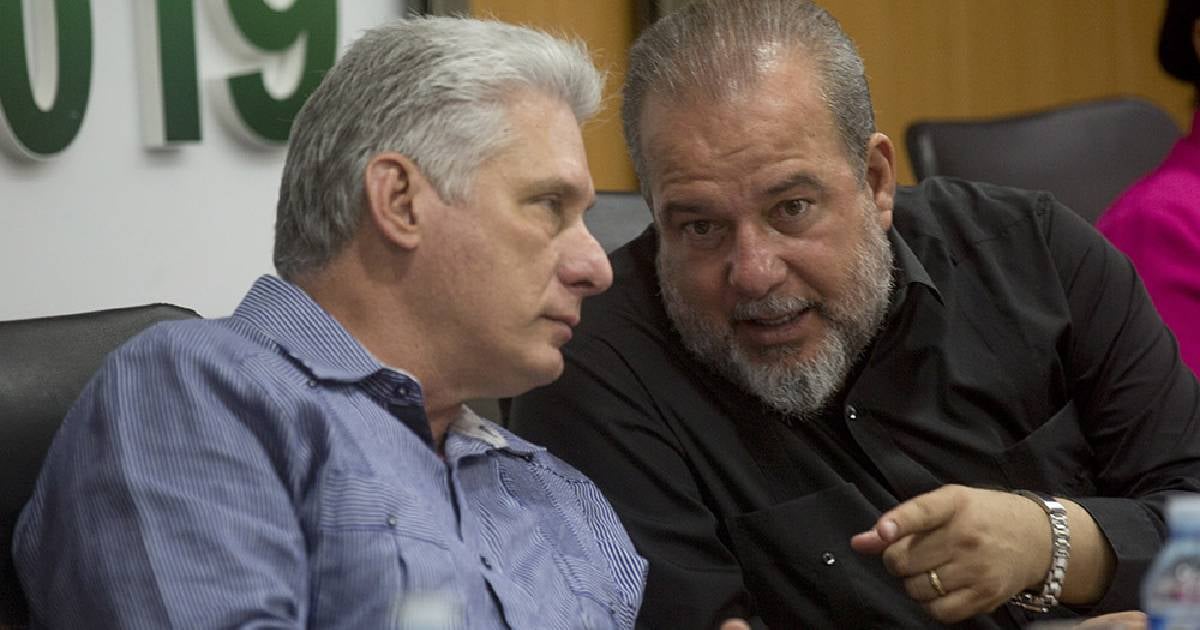
The journalist Manuel Somoza strongly criticized the functioning of the official mechanisms for complaints and proposals to the Government, in light of the recent meeting led by President Miguel Díaz-Canel in Havana.
In a public testimony shared through his Facebook profile, Somoza recounted his experience with the digital channel set up for citizen communication, while describing those structures as "yet another manifestation of inept, insensitive bureaucracy that is incapable of rising to the moment we are living through."
The reporter recalled that, on March 31, 2025, he sent a citizen proposal to Prime Minister Manuel Marrero Cruz with the support of his neighbors and the Vice President of the Ceiba-Kohly Council.
His initiative proposed the creation of a system of free services and discounts of up to 60% on state and private products and services for individuals over 60 years old, as a practical measure to mitigate the impact of inflation that devours pensions.
According to his testimony, the proposal was forwarded without a clear response between different levels of the state apparatus.
First, a provincial government official from Havana contacted him in May to inform him that the document had been forwarded to the governor.
Then, in July, two officials of the same rank informed him that the proposal had been referred to the vice governor, who was supposedly in charge of a program for senior citizens.
Somoza insisted that the implementation of his initiative was not the responsibility of a provincial government, but rather the Prime Minister's, yet the file ended up lost in the bureaucratic apparatus.
"I still don’t know where the citizen proposal may have ended up, with a strong suspicion that it must be lying in some desk drawer," he wrote.
The journalist connected his complaint with the recent words of the leader Díaz-Canel, who asked local authorities to “shake off so much passivity” in the face of problems that overwhelm the capital, such as garbage, power outages, and shortages.
But Somoza emphasized that the passivity lies precisely in the structures created to listen to the people, which have, according to him, become useless instruments of a disconnected administration from reality.
“The fate of our proposal is not an isolated fact,” the journalist warned, urging the leaders to “ground themselves in the stark reality of Cuba,” characterized by broken promises, ineffective plans, and increasing social distrust.
During the recent meetings of the First Secretary of the Communist Party of Cuba (PCC) with ministers, military leaders, and senior officials from the Political Bureau, following the protests and kettles that recently shook the capital, the leader emphasized that “the demands of the population are legitimate, but they must be made in the designated places: within the Party, in government institutions, and state agencies.”
In this regard, Cuban journalist José Raúl Gallego commented on his social media: “I believe that for the first time we should listen to Díaz-Canel: the protests should be directed there. To the Party, to the Government, to the police stations. Occupy those spaces that legitimately belong to the citizens and force out those who have usurped power for six decades and are responsible for all of Cuba's problems.”
During one of the meetings, the leader stated that “all organizations, institutions, and party structures” are focused on the capital and acknowledged that the problems “are significant” and “cannot be resolved over a weekend”, which is why he demanded a consistent approach to the work.
He also acknowledged "accumulated organizational problems" identified in the current support operation.
The appeal to “put things in order in Havana” by Díaz-Canel sparked a wave of indignation and sarcasm among the citizens.
Thousands of comments agreed on a central idea: the real disorder is not in the streets, but in the country's administration.
"If you want to clean up, start with the Council of State", wrote a user in response to the official message, while another ironically remarked: "After 66 years of disaster, now they remember order".
Frequently Asked Questions about Bureaucratic Inefficiency in Cuba
Why is the complaint and suggestion system in Cuba considered ineffective?
The complaints and proposals system in Cuba is criticized for its inept, insensitive, and incapable bureaucracy, which hinders effective communication between citizens and the government. Citizen proposals, such as the one put forward by journalist Manuel Somoza, often end up lost in the bureaucratic maze without receiving an adequate response or being implemented.
How does bureaucracy affect older adults in Cuba?
Bureaucracy severely impacts the elderly in Cuba, as demonstrated by journalist Somoza's experience, who proposed a discount system to alleviate the inflation affecting pensions. The lack of response and action from the government causes these proposals to remain stagnant, leaving older adults without the necessary support in the midst of an economic crisis.
What measures has the Cuban government taken in response to criticisms of its management?
The Cuban government, represented by Miguel Díaz-Canel, has acknowledged significant issues in its management, but its measures are rhetorical and do not offer concrete solutions. The calls to "organize and clean" Havana do not translate into effective actions, and the structures created to listen to the people are seen as useless instruments.
What do Cuban citizens think about the government's promises?
Cuban citizens are skeptical about the government's promises, as they see a contrast between the official discourse and everyday reality. The lack of tangible solutions and the continued repetition of unfulfilled promises have generated distrust and frustration among the population, which faces issues such as shortages and blackouts without effective responses from the State.
Filed under: