
Related videos:
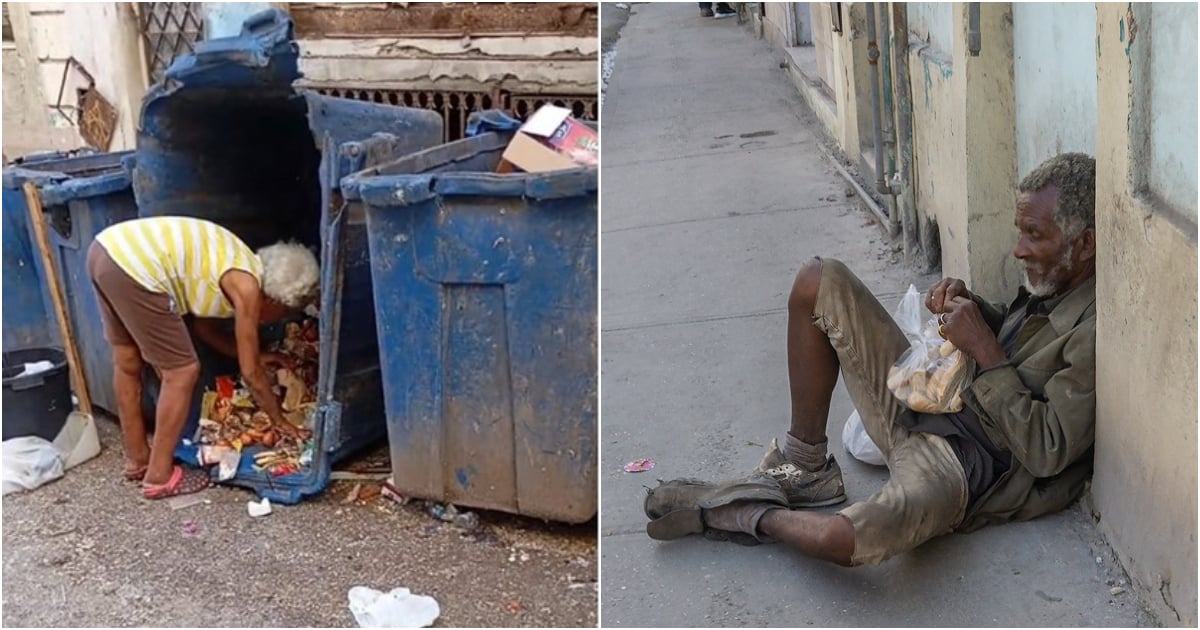
The independent writer Yasser Sosa Tamayo, residing in Santiago de Cuba, published a harsh piece on Facebook in which he describes daily life in the country as a journey towards shipwreck.
His account, filled with stark images and everyday testimonies, denounces the endless power outages, the shortage of food, and the extreme conditions in hospitals.
Sosa Tamayo reports that families go without electricity for up to 12 hours, and that refrigerators smell of rotten food, while cooking is done with firewood or charcoal to obtain rice that doesn't satisfy and bread that disappears before it reaches the table.
The writer also addresses the endless queues, the frustration of the people, and the lack of basic supplies in hospitals.
"Hospitals look like ghosts. There are no IVs, no antibiotics, no gauze. Mothers bring their sick children, and doctors ask them to even bring cotton. If you don't have it, there's no cure," she describes.
It also refers to how slogans such as “Homeland or Death” or “To Resist is to Win” still remain on the walls.
“However, what is the point of resisting if ideals do not fill plates, do not heal bodies, do not turn on the light? Resisting here is going to bed hungry, selling your clothes, lying to your child and telling them that tomorrow will be better, even though you know it won’t be,” she asks.
In his view, in Cuba, poverty “is not hidden: it is palpable,” while he notes that the island today is synonymous with “hunger, fatigue, anger, darkness. It is not a metaphor. It is not poetry. It is the truth that burns. Here, one survives. But one does not live.”
As a closing note to his widely shared message, he warns in reference to the government: “Someone tell the captain that this ship is heading for disaster, taking its people down with it.”
Her post has resonated with users who see it not just as an individual complaint, but as a reflection of the collective despair that pervades the island.
Weeks ago, in a similar reflection, engineer Yulieta Hernández expressed the view that life on the island is defined by the “normalization of abnormality”, as part of a structural and ongoing polycrisis that leads to the belief that in the country, one does not survive but rather “over-dies.”
Energy, food, health, education, transport, housing, connectivity, the economy, security, and even social values are all affected by a constant collapse that strikes without respite, he emphasized.
At the end of June, Sayli Alba Álvarez, a worker at the Provincial Center of the Book and Literature in Sancti Spíritus, described how she walked one night, burdened with bags, alongside her son, searching for something as basic as electricity to sleep.
But what he found was a city shrouded in darkness. And what he felt, more than exhaustion, was defeat. A silent defeat that no lamp can solve, sweeping away the hopes of entire generations. To which he declared: My city has died, and I have run to hide.”
Even official spokespeople like Michel Torres Corona, known for his role in the propaganda space Con Filo, admitted about the current state of affairs in Cuba that the Revolution is “stuck”, while denouncing the double standards and complaining about the blackouts affecting the capital.
The presenter’s words came at a moment of increasing tension in Havana, where after several consecutive days of blackouts and water shortages, .
The statement coincides with that of another regime spokesperson, the singer Israel Rojas, who also acknowledged on social media that “what we are experiencing is of an ineffable seriousness,” while he considered that “everyone has the right, the duty, and almost the obligation to express their pain as they experience it”.
Likewise, Carlos and Ele Alfonso, iconic figures in Cuban music and regular representatives of the Nueva Trova and Grupo Síntesis, expressed their frustration on social media due to the constant power outages.
Frequently Asked Questions about the Situation in Cuba and Its Socioeconomic Impact
What is the current situation in Cuba according to the complaint made by the writer Yasser Sosa Tamayo?
The situation in Cuba is described as a social shipwreck by Yasser Sosa Tamayo, who denounces endless blackouts, food shortages, and extreme precariousness in hospitals. Families face long hours without electricity, a lack of basic food items, and deplorable conditions in health services.
How does the economic crisis affect the elderly and retired professionals in Cuba?
The economic crisis in Cuba has left many elderly people and retired professionals in extreme conditions, facing a lack of family and institutional support. Cases like that of Professor Manuel, who survives by selling recycled bags, demonstrate the precarious situation faced by those who dedicated their lives to the country.
What impact do blackouts have on the daily life of Cubans?
The blackouts in Cuba have had a devastating impact on daily life. Entire families sleep in doorways and patios to escape the heat, while the lack of electricity affects food preservation and the mental health of the population. This situation is described as a collective punishment with no apparent solution.
How do activists and citizens describe the socioeconomic situation in Cuba?
The socioeconomic situation in Cuba is described as a “normalization of abnormality”, with a structural polycrisis affecting all aspects of daily life. Citizens face constant blackouts, shortages of food and medicines, and a collapsed infrastructure that does not guarantee basic needs.
What measures has the Cuban government taken to address the current crisis?
The Cuban government has announced increases in minimum pensions, but these measures are insufficient to cover the high cost of living and do not address the underlying causes of the crisis. Citizens continue to face extreme difficulties and the lack of effective solutions from the authorities.
Filed under: