
Related videos:
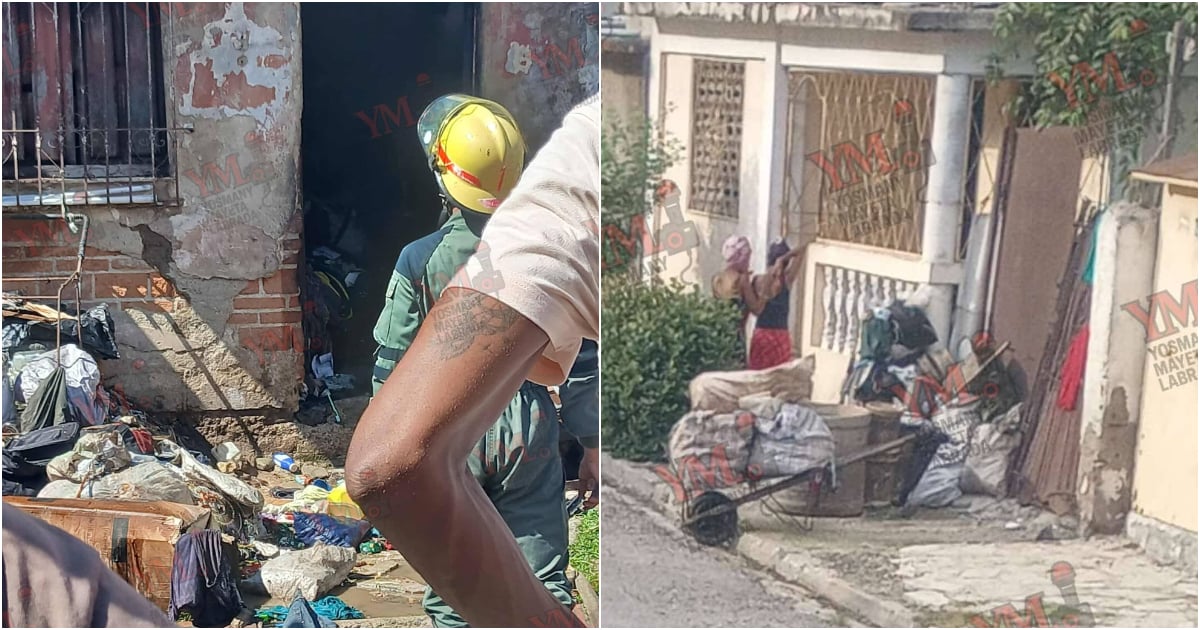
A fire that occurred on D Street between 5th and 6th, in the Agüero neighborhood of Santiago de Cuba, has left a family completely homeless, now surviving on the street amid ruins, garbage, and official neglect.
Neighbors reported that the residents of the house, who appeared to have mental health issues, were collecting waste from the city's trash bins to store it in their home, which, combined with the precarious hygiene conditions, may have contributed to the fire.
The elderly mother of the family now remains in the hallway, without shelter or food, while the little that was salvaged from the fire is piled in foreign spaces, raising concerns about insects and diseases, reported through his profile on Facebook by independent journalist Yosmany Mayeta Labrada.
Although the authorities removed one waste container, another one still remains in front of the house, and inside the home, garbage continues to accumulate, turning the surroundings into an unhealthy site that affects the entire community.
Neighbors lament that the tragedy not only reduced a home to ashes, but also exposed official indifference.
"Yesterday the flames, today the garbage, tomorrow the storm… and in between, a family on the street with an elderly person without shelter or food," a resident reported.
Comments on social media reflect pain and demands: "Where is the delegate, the Federation of Cuban Women, the social workers, the medical office?" questioned a neighbor, while others called for urgent help for the affected family.
The accumulation of waste and the drought affecting the eastern part of the country led to a raging fire in a dump on 16th Street in the Chicharrones neighborhood in Santiago de Cuba weeks ago, which reached significant proportions after spreading to a hillside covered with trees adjacent to several homes in the area.
The flames generated great concern among the residents, who feared that the fire would spread to their homes
Additionally, a fire nearly completely destroyed a home in the city of Santiago on September 14, resulting in severe material damage but no injuries or fatalities.
Also, in the same city, at the end of September, an electric motorcycle caught fire in the middle of the street.
In Santiago de Cuba, a former student had an unimaginable reunion with his old chemistry teacher, abandoned on the street, without family and marked by loneliness.
Similar situations are experienced by tens of thousands of people and families throughout Cuba, reflecting the widespread housing crisis and the resulting impoverishment, primarily due to failed economic policies adopted by the government and its centrally planned, Soviet-style economic model.
Several Cuban families are living in extreme poverty inside the abandoned hospital of Guanito, in Pinar del Río, an old healthcare facility repurposed as an informal shelter after decades of neglect.
In the Riomar building, in Miramar, several homeless individuals have occupied abandoned apartments, where they survive without electricity or water, in an environment of decay and neglect.
In provinces like Granma, more than 30,000 families still live on dirt floors, and it is estimated that over 110,000 homes are in poor or fair condition. Nationwide, the housing deficit amounts to more than 800,000 homes.
As part of its proposals in response to this crisis, the government has begun installing houses made from containers in Las Tunas, Holguín, Guantánamo, and Sancti Spíritus, a measure that has raised doubts about its suitability considering the climate and basic needs.
Meanwhile, the number of informal and precarious neighborhoods continues to grow, with hundreds of settlements lacking legal recognition and guaranteed access to public services, which deepens social and urban exclusion in the country.
Frequently Asked Questions about Fires and Housing Crisis in Santiago de Cuba
What is the main cause of the fire that left a family homeless in Santiago de Cuba?
The fire was exacerbated by the accumulation of garbage and the poor hygiene conditions in the residence located in the Agüero neighborhood. Residents would collect waste from the city's dumpsters to store it in the house, which, combined with the unsanitary state of the place, led to the incident.
How has the Cuban government responded to the housing crisis and the fires in Santiago de Cuba?
Until now, the government's response has been insufficient and delayed. The community affected by the fire denounces the lack of assistance and effective solutions from the authorities, reflecting an official indifference to the urgent needs of those impacted.
What impact does the accumulation of garbage have on the fires reported in Santiago de Cuba?
The accumulation of garbage is a critical factor that has increased the risk of fires in Santiago de Cuba. The lack of timely waste collection creates unsanitary hotspots that not only facilitate the ignition of fires but also pose a danger to public health and the safety of residents.
What measures are being taken to address the housing crisis in Cuba?
The Cuban government has started to install houses made from containers in some provinces such as Las Tunas and Holguín. However, this measure has raised questions about its suitability for basic needs and the country's climate. Furthermore, it does not comprehensively address the housing crisis affecting more than 800,000 homes nationwide.
Filed under: