
Related videos:
United States will implement the strictest customs controls in its recent history starting December 26 for all individuals entering or leaving the country who are not U.S. citizens, including legal permanent residents (green card holders).
The measure, according to reports from media outlets like Univisión, is part of a national expansion of the biometric entry and exit system, designed to detect immigration fraud, identify violations of residency rules, and enhance border security.
According to regulatory documents released for the first time on November 20, the Department of Homeland Security (DHS) will eliminate age exemptions and authorize Customs and Border Protection (CBP) to collect fingerprints, facial scans, and even, in certain law enforcement cases, DNA samples from all foreign travelers, including permanent residents.
The rule also introduces a fee of $30 for stays longer than 29 days, with penalties that can reach up to $5,000 for non-compliance.
According to experts, the new regulation aims to verify whether permanent residents obtained their status legitimately.
“These new regulations aim to ensure that permanent residents are inspected more thoroughly to determine whether these individuals obtained their residency through fraud,” explained immigration attorney Luis Victoria to Univisión.
Among the most suspicious cases are fictitious marriages, a type of fraud that is actively pursued by the authorities.
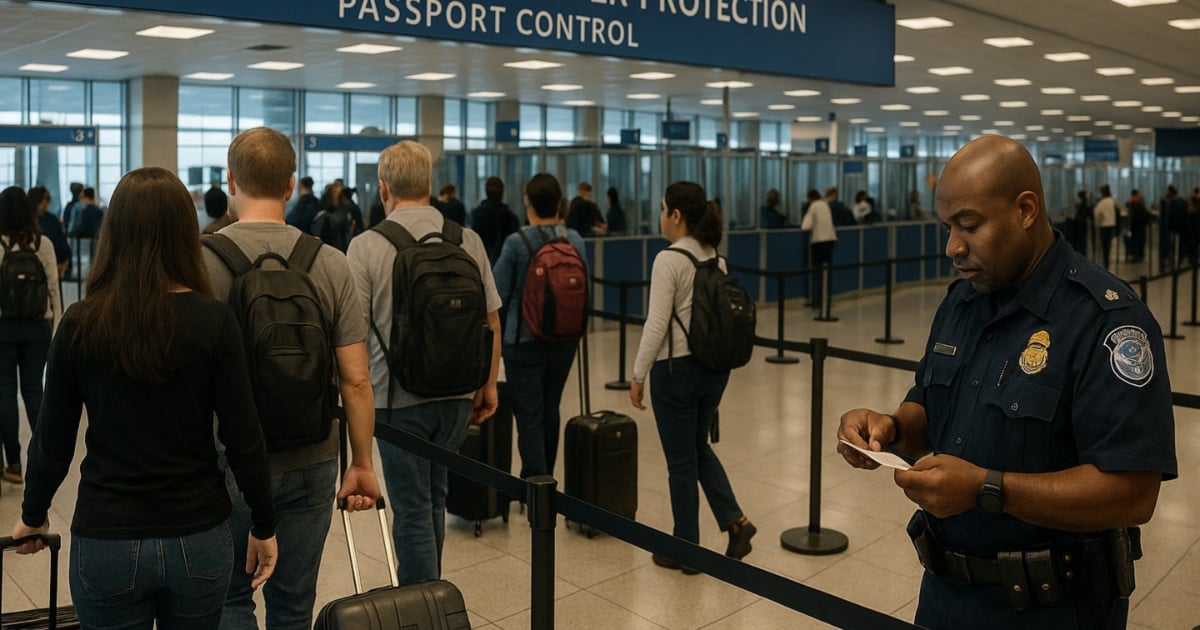
Biometric controls will not be limited to airports. CBP will install facial recognition gates in several of the busiest terminals in the country and will deploy kiosks for iris and fingerprint capture at multiple land crossings.
Permanent residents who travel frequently, including those entering from Canada and Mexico, may face longer lines during the implementation of the program.
The DHS claims that this expansion responds to a mandate from Congress in 1996, but its implementation has accelerated under the current administration.
Authorities claim that the unified biometric system will help close verification gaps, which, according to official estimates, contribute to 42% of the increase in the undocumented population coming from individuals who overstay their visas.
The program authorizes the retention of biometric data collected for up to 75 years, and to share it with other federal security agencies, a measure that has already raised criticism from privacy advocacy organizations, who warn that it could normalize routine genetic collection.
The DHS, however, insists that DNA samples will only be used in "specific" research scenarios.
Permanent residents should pay special attention if they have engaged in situations that may raise suspicions during the new checks:
- Having been outside the U.S. for more than a year.
- To have obtained residency through fraud
- Having committed offenses after obtaining the green card
Although the regulation does not entail direct changes to the legal residency requirements, it significantly increases the level of scrutiny at the country's entry points.
With these new regulations, the United States is moving towards a stricter and technologically integrated border system, while permanent residents will have to face much more rigorous checks every time they cross the border, even on brief or routine trips.
Filed under: