
Related videos:
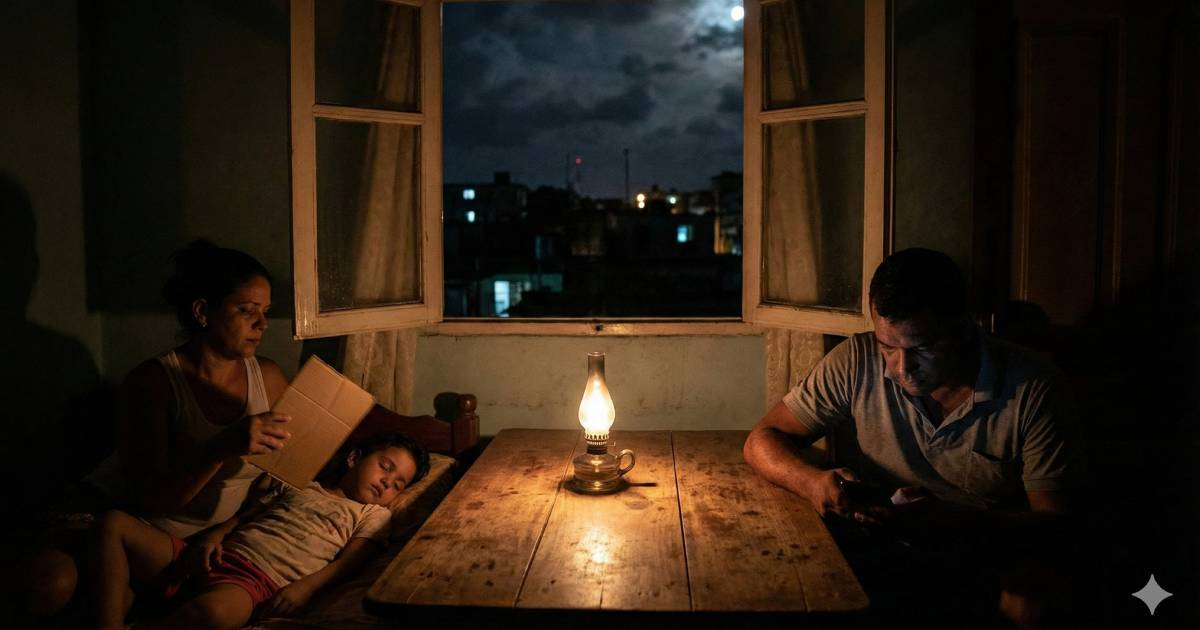
The Electric Company of Guantánamo acknowledged that the province is facing a critical electricity situation, with blackouts of up to 20 hours in some circuits, due to technical failures, a deficit of imported fuel, and limitations in national generation.
The general director of the Electric Company in the province, Joaquín Díaz Cantillo, acknowledged that the generation crisis in the country prevents the implementation of the blackout rotation program across much of the territory, where some circuits remain without electricity for almost the entire day, reported the station Radio Guantánamo.
As explained in a press conference, several circuits in the provincial capital and in Baracoa receive specialized treatment because they supply hospitals and other services deemed essential, which necessitates keeping them operational 24 hours a day.
This decision, he pointed out, benefits not only health institutions but also thousands of residential customers connected to those same circuits.
Díaz Cantillo explained that hospitals such as Agostinho Neto and the Children's Hospital rely on circuits that cover large residential areas, which is why more than 2,000 customers per circuit receive electricity in a continuous and planned manner.
A similar situation occurs in central areas of the city and in Baracoa, where the circuits that supply the local hospital also support the service to entire communities.
The official also explained that these circuits serve a protective function for the National Electric Power System (SEN).
When demand exceeds available capacity, automatic mechanisms come into play that disconnect loads to prevent a total system failure, which can lead to sudden service interruptions.
In response to complaints about possible damage to household appliances, the executive assured that there should not be any issues, as the transformers regulate the voltage that reaches homes, and the risk of damage is associated with surges, not with interruptions to the service.
The Electric Company acknowledged the "dissatisfaction" of the population due to an unstable service and reiterated that the situation necessitates seeking alternatives to reduce the duration of interruptions, in a context marked by the precariousness of the SEN.
Weeks ago, it became known that the province of Ciego de Ávila is also suffering from extended electricity outages lasting up to 20 hours each day and more, with a daytime “respite” increasingly weak, sustained only by solar parks.
The Electric Union (UNE) reported that, on the previous day, the country experienced disruptions for 24 hours, with a maximum interruption of 1,748 MW at 6:10 p.m., due to a generation capacity deficit.
For the peak hours of the evening this Friday, the entity estimates impacts that could reach 1,770 MW.
The main cause of the electric deficit in Cuba is the shortage of fuel and the outdated state of the country's thermoelectric plants. Additionally, scheduled maintenance and breakdowns at several power plants have contributed to the critical situation of the SEN.
Prolonged blackouts severely impact the daily lives of Cubans, , the use of appliances, and the enjoyment of basic activities such as cooking and ventilating homes, especially in a warm climate.
This generates growing social unrest due to the lack of effective solutions from the government.
Filed under: