
Related videos:
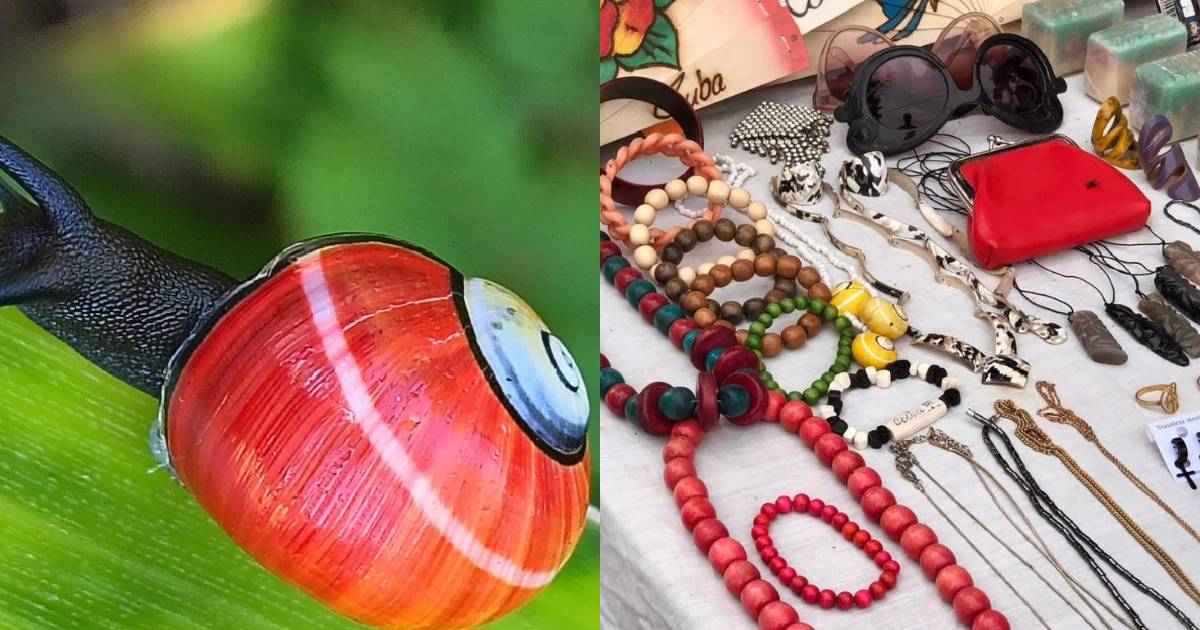
A citizen complaint regarding the sale of crafts made with polimitas prompted the Ministry of Science, Technology, and the Environment (Citma) to order an investigation and warn about the illegal exploitation of protected species in Cuba.
Armando Rodríguez Batista, head of the sector, raised concerns about the use of these mollusks in the making of crafts, after receiving a citizen complaint related to a sales stall in the Cuban capital.
In a note published on his Facebook profile on December 21, Rodríguez described the practice as illegal and as an assault on the nation's natural and cultural heritage.
The minister recalled that the polimita, a mollusk endemic to Cuba, is critically endangered and serves as a symbol of national biodiversity.
In his opinion, its preservation is not only a legal obligation but also an ethical commitment to future generations.
Turning it into a decorative object, she claimed, means stripping the country of an irreplaceable legacy.
Rodríguez reported that he instructed to investigate the origin of the reported handcrafted items and to apply the corresponding penalties.
At the same time, he called on artisans and artists to explore creative alternatives that respect biodiversity, through the use of sustainable materials and designs that celebrate natural wealth without causing harm.
In his message, he also warned that this is not an isolated incident, as the trade of other endangered species has also been detected, such as the hawksbill turtle, the Cuban pigeon, the kingbird, and the Cuban parakeet, which are used for artisanal purposes.
These practices, he noted, highlight the urgency of strengthening environmental education and promoting a cultural shift that prioritizes the protection of life and diversity over immediate economic benefits.
The publication generated numerous reactions. The Antonio Núñez Jiménez Foundation for Nature and Man called for greater coordination between environmental organizations, trade regulatory agencies, and artisan associations, as well as for strengthening environmental dialogue to address practices that, in some cases, stem from a lack of understanding.
Other comments emphasized the civic responsibility to reject the trade of protected species and report illegal activities.
Several opinions highlighted the role that institutions such as the Cuban Cultural Goods Fund and state inspections should play at sales points for artisans, especially among self-employed workers.
A stricter application of the law was also demanded, without ambiguities, and the use of polymitas and carey in crafts was characterized not as folklore, but as an environmental crime that causes irreversible damage.
For several users, the report highlights the need to turn every citizen into an active guardian of Cuban biodiversity.
The Polymita -from the Greek poly (many) and mitos (stripes)- is a genus of land snails endemic to Cuba, regarded as the most beautiful in the world due to their bright colors and distinctive shell patterns.
The conservation biologist Bernardo Reyes-Tur, a professor at the University of Oriente in Santiago de Cuba, along with evolutionary geneticist and mollusk expert Angus Davison, an academic at the University of Nottingham, are leading a mission to prevent the extinction of the six known species of Polymita from their native forest habitats in eastern Cuba, as revealed in an August report by BBC News.
Among the six species, the most endangered is the Polymita sulphurosa, which is “lime green with patterns of blue flames around its spirals and bright orange and yellow bands along its shell,” the media outlet described.
However, they are all very colorful, an extraordinary feature “that constitutes an evolutionary mystery in itself,” he added.
The Polymita Picta was declared Mollusk of the Year 2022, according to an international survey organized by several scientific institutions.
Filed under: