
Related videos:
A tanker that departed from Africa with fuel bound for Cuba has changed its course mid-journey and is now heading to a port in the Dominican Republic, a shift that reflects the profound difficulties the regime faces in securing the energy supply that the country needs.
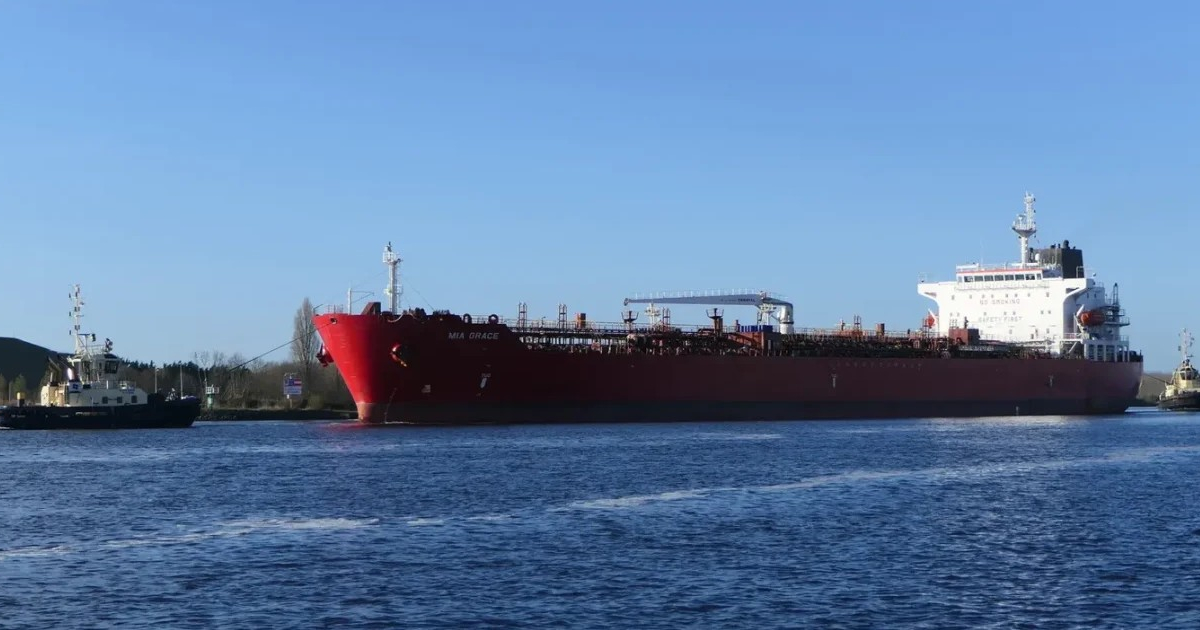
The petrochemical vessel Mia Grace, which departed on January 19 from Lomé, Togo, with a cargo intended for Havana, has changed its manifest and is now headed to the port of Río Haina, near Santo Domingo, where it is expected to arrive on February 2.
The satellite tracking platforms show that the vessel, sailing under the flag of the Marshall Islands, changed its destination during the Atlantic crossing, raising uncertainty about whether its fuel cargo - reportedly diesel or fuel oil - will arrive in Cuba or remain at another transit point.
Rio Haina is an important Dominican commercial port specialized in general cargo, liquids, and chemical products, located very close to the Dominican Oil Refinery (REFIDOMSA), which handles the refining and importation of petroleum derivatives.
The Mia Grace, a tanker for oil and chemical products, measures 183 meters in overall length and 32 meters in beam, with a deadweight tonnage of 50 tons.
According to information revealed to Diario de Cuba by Jorge Piñón, a non-resident researcher at the Energy Institute of the University of Texas, the ship could be transporting a cash purchase made by the company Cubametales, owned by the GAESA Business Group, with a European trader acting as an intermediary.
"The quality of the cargo is unclear, but we speculate that it is diesel or fuel oil. Togo does not have any oil refining facilities, but it exports refined oil and hosts a significant maritime transit and logistics infrastructure," he clarified.
The expert believes that the ship could be carrying around 314,500 barrels of diesel or 280,500 barrels of fuel oil. "It seems that it is not fully loaded, according to its draft," he said.
The Mia Grace originally departed from the port of Antwerp, Belgium, where GAESA has made timely purchases in previous years, and from there it went to Togo to collect its cargo.
The deviation from its route coincides with a worsening of the energy crisis in Cuba, which has further deteriorated the already precarious daily life of thousands of families and has compelled segments of the population to protest with banging pots and pans due to blackouts.
Awaiting decisions on whether the ship will ultimately unload its cargo in the Dominican Republic or change plans once again, the population watches with concern as logistical complications translate into more uncertainty for a country that urgently needs fuel.
The end of access to Venezuelan oil for Cuba has forced Havana to turn to fuel purchases in non-traditional markets and to acquire spot loads, which is not part of its usual supply strategy.
In recent years, Cuban vessels have purchased liquefied petroleum gas in the Dominican Republic and Jamaica, although Cuban authorities typically do not release data on these transactions.
Filed under: