
Related videos:
Cuba experienced another day marked by widespread and prolonged blackouts.
According to the report from the Electric Union (UNE), on Thursday, the service was affected for 24 hours, and the maximum impact due to a generation capacity deficit reached 1,890 megawatts (MW) at 6:30 PM, one of the highest peaks recorded in recent weeks.
At 6:00 am this Friday, the National Electrical System (SEN) had only 1,220 MW available, against a demand of 2,000 MW, leaving 896 MW uncovered.
For the midday schedule, UNE itself estimated that the impact would rise to 1,150 MW, confirming that the outages would not be brief or isolated, but rather widespread throughout the country.
The crisis is directly related to the poor condition of the thermoelectric plant and the lack of sustained investments over the years.
At the moment, five thermal power units from the Mariel, Nuevitas, Felton, and Antonio Maceo plants are out of service due to breakdowns.
In addition to this, there are maintenance outages in three sections of the CTE Santa Cruz, Carlos Manuel de Céspedes, and the Antonio Guiteras, the largest in the country, which went out of service on Thursday.
Additionally, there are 329 MW out of service due to limitations in thermal generation, which further reduces the actual capacity of the system.
For the evening peak hours, the UNE forecasted the possible contribution of unit 2 of the Santa Cruz CTE with 80 MW and unit 6 of Renté, with 45 MW, which is still in the startup process.
Nonetheless, the anticipated availability would only be 1,325 MW, compared to an estimated peak demand of 3,100 MW, leaving a deficit of 1,755 MW and a calculated impact of up to 1,785 MW.
Not even the contribution of renewable energies can offset the structural collapse.
The 49 photovoltaic solar parks delivered a production of 2,528 megawatt-hours (MWh), with a peak capacity of 488 MW at noon, a significant figure, but clearly insufficient to cover the gap created by broken, aging, or halted thermal power plants.
In Havana, the Electric Company reported on Facebook that on Thursday the service was affected for 12 hours and 31 minutes. The peak capacity reached 387 MW at 6:30 PM, with 80 MW due to emergencies.
The service interruption was restored at 11:49 PM, but at the time of closing this report, six blocks and 40 MW of emergency were still affected, totaling 268 MW, with a forecast for restoration in the morning.
The company itself warned that if the conditions of the SEN do not improve, power cuts due to "energy contingency" will continue without scheduled times.
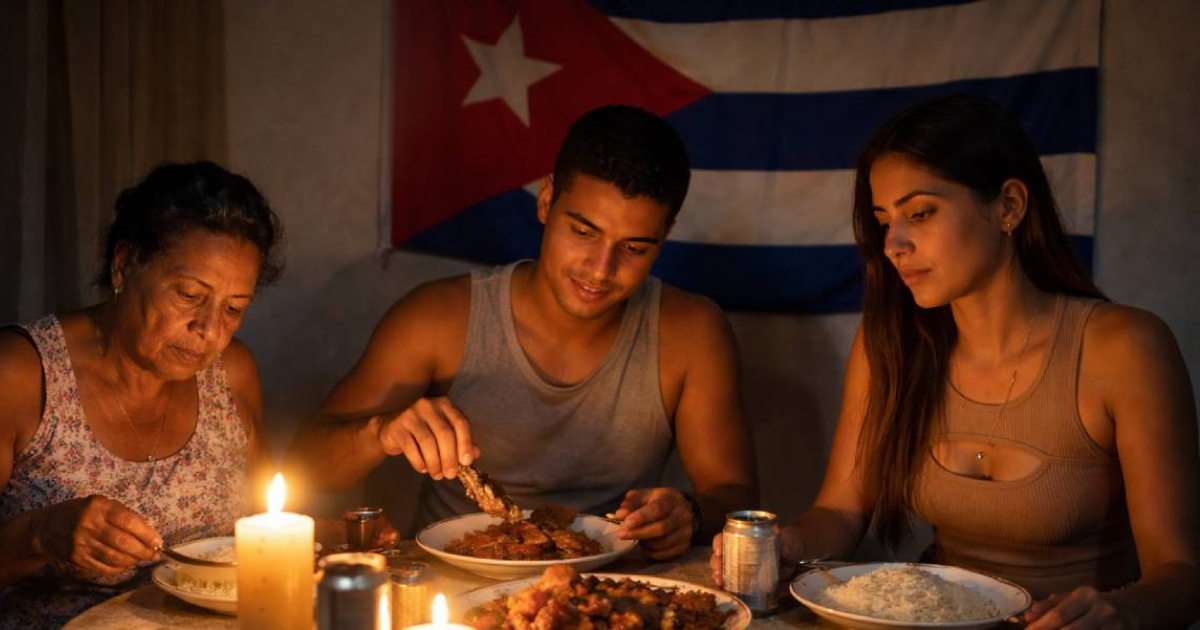
Behind these numbers lies an increasingly harsh reality for the population. Power outages not only mean a lack of electricity but also refrigerators turned off, spoiled food, hospitals running on generators, affected schools, halted transportation, and entire families sleeping in the dark and heat.
The energy crisis is the direct result of decades of mismanagement, neglect of infrastructure, and failed economic decisions by the government, which today leaves millions of Cubans paying the price.
While the authorities repeat technical statements, the country is experiencing deep social weariness.
Electricity, which should be a guaranteed basic service, has become an intermittent luxury. The uncertainty is complete: no one knows when the power will be on, how long the blackout will last, or which area will be next.
In the midst of this almost permanent darkness, the Cuban people endure as best they can, bearing the human cost of a crisis they did not cause but suffer from every day.
Filed under: