
Related videos:
Steven Cheung, director of Communications at the White House, responded to the New York Times and defended the Trump Administration's position in the ongoing dispute over a report regarding alleged conditions set by Washington in its dealings with Cuba.
In a message posted on X, Cheung stated that "the only ones who know the situation in Cuba are President Trump and Marco Rubio" and dismissed the journalists from the newspaper, whom he accused of relying on "uninformed sources that know nothing about what is happening."
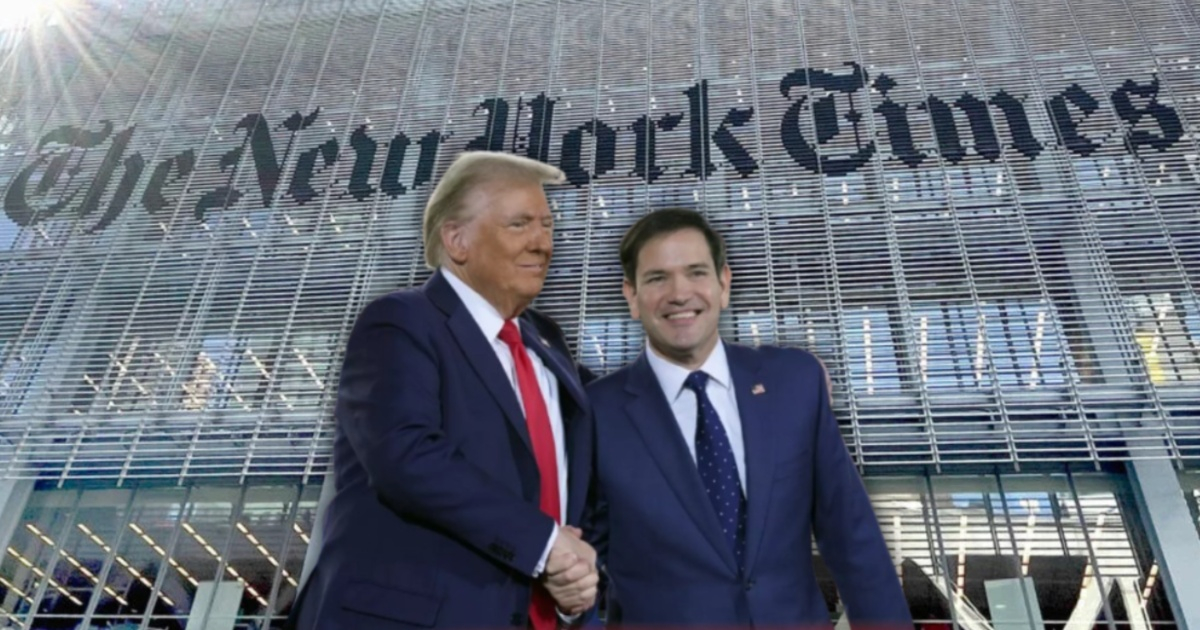
Cheung's reaction came after Charlie Stadtlander, spokesman for the New York Times, publicly defended the newspaper's report in the face of attacks from Marco Rubio.
Stadtlander wrote on X that the published information was based on conversations with "four individuals aware of the discussions between the United States and Cuba" and emphasized that the journalists from the outlet contacted the State Department "well before publication" in order to obtain comments, without receiving any objections regarding the content.
He also stated that neither Rubio nor anyone else had presented "any factual rebuttal" and concluded with a firm assertion: "Our information is truthful and accurate."
Before that reproduction of the newspaper, Rubio himself had strongly denied the report.
The Secretary of State described the information as "fake news" and criticized the media for continuing to rely on unreliable sources.
The report in dispute
"The reason why so many American media outlets continue to publish false news like this is that they keep relying on charlatans and liars who claim to be well-informed as their sources," he wrote on X.
The contested report, published on March 16, stated that Washington had proposed the departure of Miguel Díaz-Canel as a condition for progressing in negotiations with the Cuban regime.
The piece cited four anonymous individuals familiar with the discussions between both governments, stating that the Donald Trump Administration had communicated to Havana that the departure of the Cuban leader would facilitate progress in the bilateral dialogue.
One of the most controversial aspects of the article was not just the eventual departure of Díaz-Canel, but the limited scope of the changes described.
The New York Times itself, according to the archive, noted that the United States "has not been pressing for any action against members of the Castro family, who remain the main power players in the country."
That approach provoked a strong reaction among Cubans both on the Island and abroad, because for many it would imply the replacement of a visible figure without changing the actual control of the political and military structure.
Amid numerous comments and reactions, the idea prevailed that Díaz-Canel does not represent the center of power, but rather a leader who is subordinate to an elite where Raúl Castro's influence remains decisive.
From this perspective, any scenario in which the Castro family maintains its political influence would be seen as a cosmetic change, superficial and without real impact on the political and economic life of the country.
The controversy also extended to other aspects of the report. The newspaper indicated that Washington would likewise seek the release of political prisoners and gradual economic reforms, including a greater openness to foreign investment.
However, those components were overshadowed by the main debate: whether the conversations with Havana seek a genuine transformation of the system or merely a reconfiguration of its visible faces.
In that context, Cheung's words reinforced the solidarity of the White House with Rubio and Trump in response to the version from the New York Times.
Filed under: