
Related videos:
The recent revelation of secret negotiations between Havana and the administration of Donald Trump has once again placed the Castro family at the center of power in Cuba, challenging the fragile official narrative that seeks to validate the figure of Miguel Díaz-Canel leading the discussions.
In the midst of a deep economic crisis characterized by fuel shortages, a collapse in production, and a worsening humanitarian situation, the heirs of Castroism emerge as key players in a strategy aimed at preserving political control at all costs, amidst rumors of a supposed civil transition to democracy.
Although Díaz-Canel formally holds the presidency, it was the ruler himself who confirmed that the discussions with Washington are being led by Raúl Castro, 94 years old, still regarded as the "historical leader of the revolution."
This fact illustrates that real power in Cuba remains concentrated in the military and family elite established since 1959, with the GAESA conglomerate serving as the economic backbone, according to reports this Saturday from the American media The New York Times.
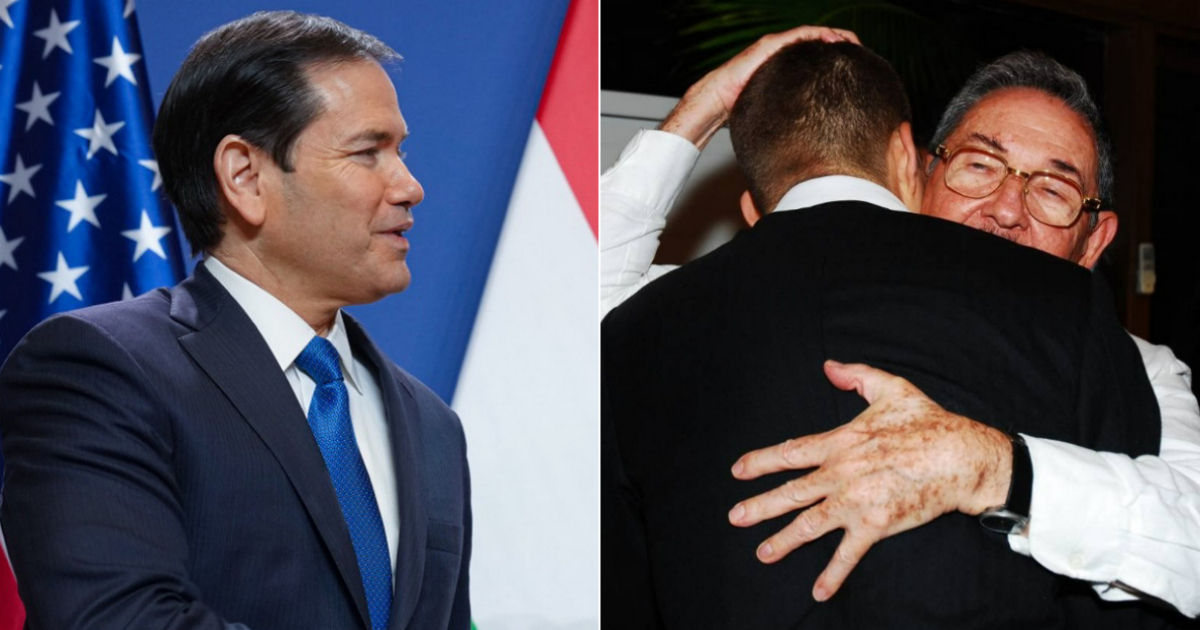
However, Secretary of State Marco Rubio has raised concerns about the accuracy of the leaks to the press regarding these contacts, recently stating that “much of what is published in the media is unreliable” and emphasizing that only he and President Trump know the actual content and scope of the ongoing negotiations with the Cuban regime.
In this new scenario, several family members have taken on visible roles. Raúl Guillermo Rodríguez Castro, the grandson of the former leader, has transitioned from being a discreet figure in power circles to acting as an intermediary in communications with U.S. officials. His recent appearance on state television confirms a calculated repositioning.
On his part, Alejandro Castro Espín, son of Raúl and a historical figure within the intelligence apparatus, has also taken on a prominent role in the negotiations. His experience in engaging with the United States during the Obama era makes him a key operator at this moment of political redefinition.
However, the most striking face of this strategy is Óscar Pérez-Oliva Fraga, the Deputy Prime Minister and Minister of Foreign Trade, who has announced the possibility for Cubans in exile to invest in the island. This measure, unthinkable for decades, aims at a controlled economic opening that seeks financial breathing room without relinquishing political power.
Some analysts are already suggesting whether Pérez-Oliva could become a figure similar to Delcy Rodríguez in Venezuela: a more pragmatic face, capable of engaging in dialogue with Washington without breaking away from the regime's structure. Her technical profile and her last name—without the direct weight of "Castro"—could make her more acceptable in a potential redesign of power.
However, this apparent renewal generates skepticism. Far from representing a break, many believe it is merely an adaptation of the system: a transition from a "revolutionary oligarchy" to a "capitalist oligarchy", where the same elites maintain control, now with market mechanisms.
For the Cuban people, who have endured years of scarcity and a lack of freedoms, the risk is clear: that the economic changes will serve only to perpetuate the elite in power, without a real transformation of the political system.
Meanwhile, from Washington, the pressure continues to push for deeper reforms, in a struggle where the future of the island remains at stake.
Filed under: