
Related videos:
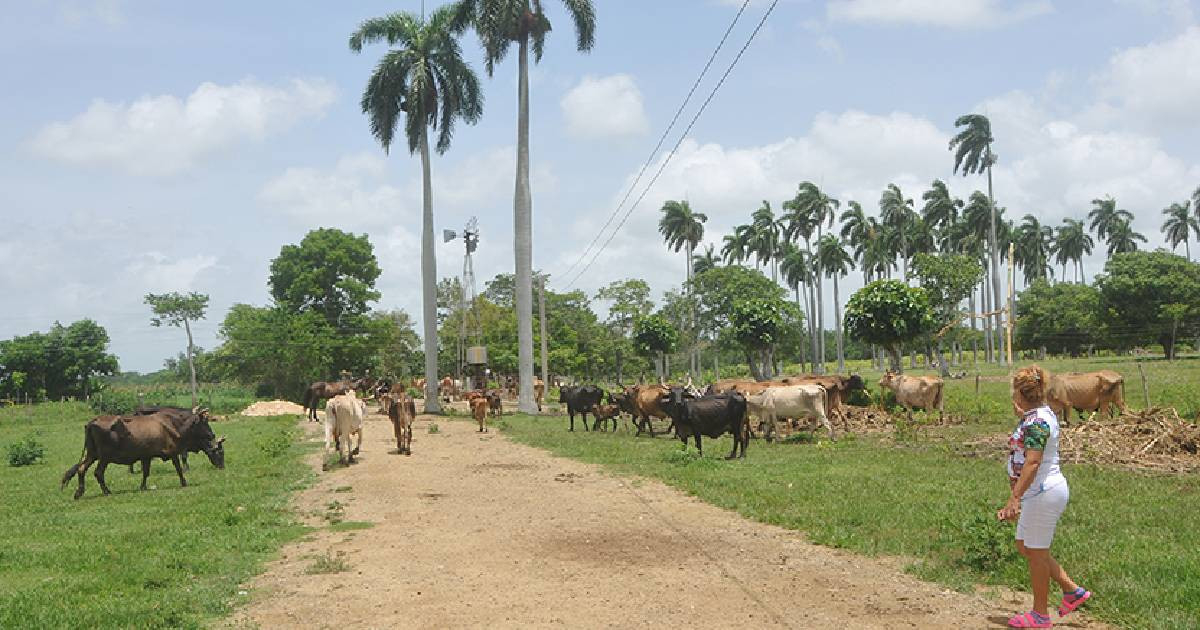
The Ordinary Plenary of the Provincial Committee of the Communist Party of Cuba (PCC) in Las Tunas discussed food production this week and acknowledged the existence of over 46,400 idle hectares as one of the main deficiencies hindering the agricultural sector in the province.
In this regard, the official newspaper 26 indicated on April 9 that during the meeting, the first secretary of the PCC in the territory, Osbel Lorenzo Rodríguez, requested "greater effort and commitment" from the holders of land and livestock.
The plenary identified several flaws, including the noncompliance with the malanga program, difficulties in the marketing of fruits, insufficient involvement of the National Movement of Urban, Suburban, and Family Agriculture in backyards and organoponics, and unjustified deaths of large livestock.
Lorenzo also highlighted the limited support for local development projects and the lack of application of science and innovation to take advantage of the potential of the eight municipalities in Las Tunas.
The leader emphasized the quality of the agricultural contracting process, agricultural extension, buffalo breeding, and timely payments to producers, aspects he linked to the Food Sovereignty and Food Security and Nutrition Law.
As progress, the plenary highlighted the promotion of 14 productive hubs, the use of animal traction and bioproducts in light of fuel shortages, and the gradual incorporation of renewable energy sources for crop irrigation and water supply to livestock.
The call for "more effort" contrasts sharply with the magnitude of the productive collapse affecting the province and the entire country.
The 2024-2025 sugar harvest in Las Tunas produced only 7,200 tons at the Antonio Guiteras mill, the only one that operated, which represented just 16% of the planned target.
Nationally, official figures confirmed production declines of root vegetables by 44%, eggs by 43%, and milk by 37.6%, while Cuba imports between 70 and 80% of the food it consumes.
This Thursday, the government published Decree 143, which formally breaks the monopoly of Acopio and allows cooperatives, private companies, and small and medium-sized enterprises to market agricultural products, although it maintains extensive state controls over prices and destinations.
The Deputy Prime Minister Jorge Luis Tapia Fonseca acknowledged that the results of the Food Sovereignty Law, approved in 2022, in food production, much remains to be done and that the progress is far from what the people expect.
Filed under: