
Related videos:
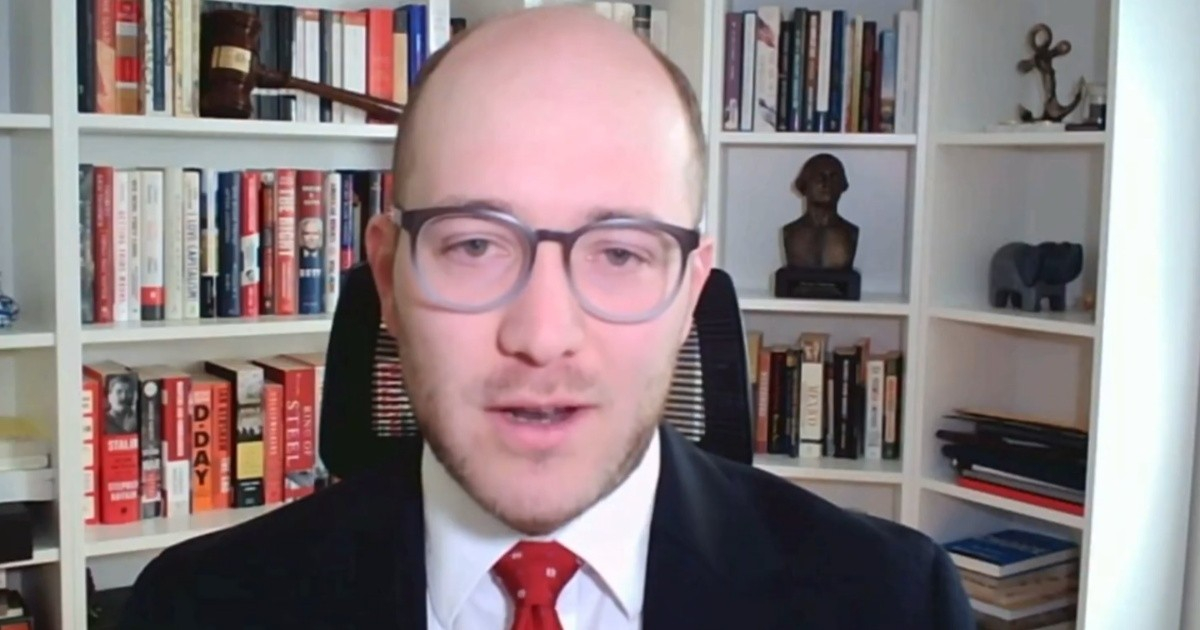
Connor Pfeiffer, Senior Director of Government Relations at FDD Action, stated this Monday on CBS News that the Cuban regime is experiencing its weakest moment since the 1959 Revolution, having lost its last external patron following the capture of Nicolás Maduro on January 3, 2026.
Pfeiffer, who has advised leaders in the Senate and the House of Representatives on foreign policy and national security matters, explained that the administration's economic pressure campaign intensified precisely at that moment when Washington took control of Venezuelan oil exports and cut the supply to Cuba.
"What happened when the U.S. captured Nicolás Maduro on January 3 and took control of Venezuelan oil exports is that Cuba suddenly lost its external patron," declared the strategist.
According to Pfeiffer, Venezuela not only sent fuel to the island: Cuba resold about half of that oil to China and other countries to obtain foreign currency. "They used Venezuelan assistance not only to sustain the economy but also to line the pockets of the regime," he noted.
The analyst emphasized that since 1959, the Cuban regime has survived solely due to external support: first from the Soviet Union—which led to the Missile Crisis—and later from Hugo Chávez and Maduro with Venezuelan oil. Without that backing, he asserted, "the U.S. now has a unique opportunity to force a political and economic change that has been overdue on the island."
The interview took place in the context of a unprecedented escalation of pressures on Cuba. On May 1, Trump signed an executive order imposing sanctions against GAESA —the military conglomerate that controls a large portion of the Cuban economy— as well as other companies and joint ventures. The administration has imposed more than 240 sanctions against Cuba since January.
Secretary of State Marco Rubio warned on May 7 that the sanctions will continue until the regime implements reforms, and he set June 5 as the deadline for foreign companies to cut their ties with GAESA.
Pfeiffer also referred to the Axios report on Cuban military drones —over 300 acquired since 2023 with support from Russia and Iran, with discussions about possible attacks on the Guantanamo Naval Base and Key West— as evidence that "the Cuban regime poses a clear threat to U.S. national security."
The energy impact of the sanctions is devastating. The Cuban Minister of Energy, Vicente de la O Levy, admitted on May 14 that Cuba had "absolutely no fuel, no diesel." The blackouts are already affecting more than 55% of the territory for up to 25 hours a day, with generation deficits exceeding 2,000 MW in May.
This scenario is further complicated by the looming federal criminal charge against Raúl Castro, aged 94, for the shooting down of two planes belonging to Brothers to the Rescue on February 24, 1996, which could be announced this week according to reports.
The Economist Intelligence Unit projects a contraction of the Cuban GDP of 7.2% by 2026, which reinforces Pfeiffer's assessment: without external backing and under maximum pressure, the regime is facing its worst situation in over six decades.
Filed under: