A journalist from the state newspaper Girón, based in Matanzas, published a chronicle on Facebook on Wednesday that circulated widely due to its stark portrayal of the Cuban crisis: children in groups begging for money on the streets, elderly individuals rummaging through trash bins, and a city that, in his words, frightens him every time he leaves his home.
Guillermo Carmona, editor of the Girón newspaper —the official organ of the Communist Party of Cuba in Matanzas—, titled the text “The City Scares Me”. It opens with an image that captures social decay: “I fear, from the depths of my humanity, the overwhelming number of children who stretch out their hands and, with a smile revealing misaligned teeth, ask you for money. They go in groups. They march, one after the other, in their dirty shorts with their ribs showing.”
The next scene is no less harsh: "We are overwhelmed by the elderly, submerged up to their knees in the dumpsters — they look like Vietnamese farmers in a rice field — sorting out the rotten and useless from the useful, and then selling what they've found in display cases and on sheets spread out on the sidewalk."
Carmona also points to the transformation of the urban fabric and the new inequality generated by the blackouts and solar panels: “Marx lied to me. Social classes are not formed by access to surplus value, but rather by the amount of sunlight.”
In Cuba, access to solar energy remains out of reach for many households. Some news reports have placed the price of a panel in the informal market between 990 and 1,000 dollars, while other studies document individual panels for significantly lower amounts and systems with batteries and inverters that exceed 1,000 dollars.
The economic gap is particularly significant compared to the average state salary, which in 2025 was 6,930 Cuban pesos per month, equivalent to about 8.9 dollars at the informal exchange rate noted at the beginning of October 2026.
Regarding the water crisis, the journalist resorts to a shipwreck metaphor: "Are we shipwrecked and not realizing it because we are in the ship's pantry buying a bit of jerky from the cook to avoid starving?" More than 300,000 inhabitants of Matanzas lacked a stable water supply at the beginning of April, according to the National Institute of Hydraulic Resources.
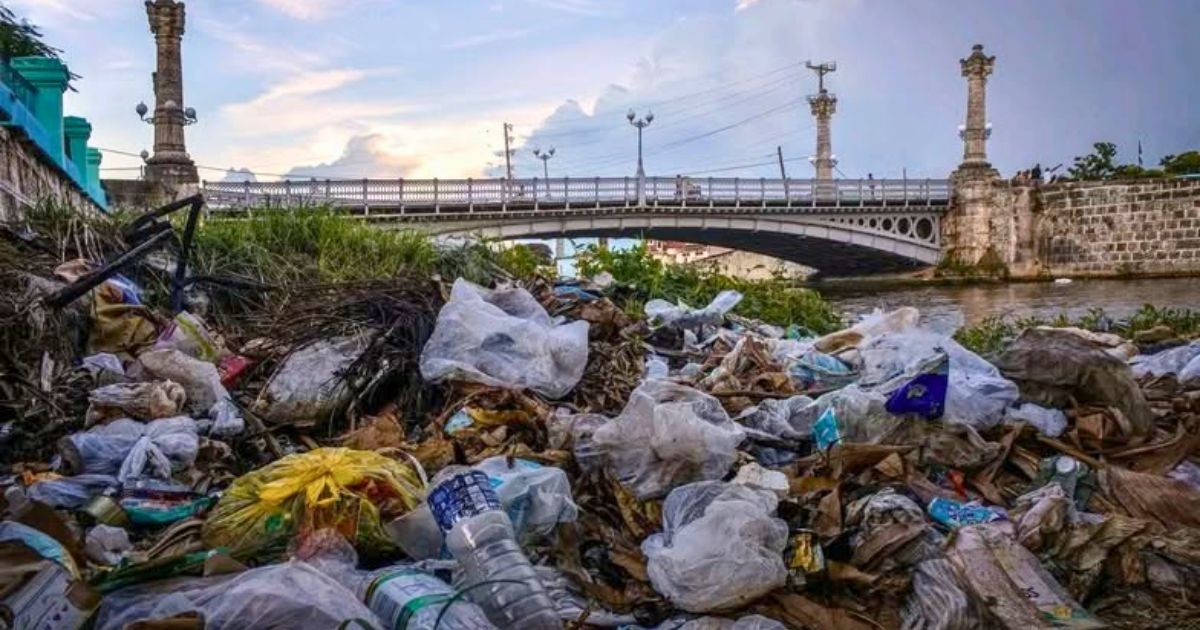
The garbage crisis is equally documented: the Municipal Enterprise of Communal Services operates with more than half of its garbage trucks, paralyzed due to a shortage of diesel and other factors, while garbage trucks block streets in the historic center for days.
The chronicle is not the first uncomfortable text by Carmona. In June, he published "The Little Rest of the Just," about a night without electricity in which he described himself as “a war refugee”, and in February 2025, he wrote “Dying is also a bureaucratic process”, about the difficulties of transporting his grandmother's body due to a lack of fuel.
The text garnered dozens of comments. One internet user wrote: "The sad thing is that it doesn't seem to matter to those who should be doing something. Most of them are profiting from our 'resistance.' And to you, journalist who writes, thank you for reflecting our lives and for your courage in capturing so many truths that they don't want to accept." Another summed up the collective feeling: "It scares us. It's a daily fear. Seeing so much neglect is frightening. The thought that no one cares about how a beautiful city is being destroyed is terrifying."
The Cuban Observatory of Human Rights estimated that 94% of the Cuban population lives in extreme poverty, while Prime Minister Manuel Marrero Cruz acknowledged the existence of 883,000 cases "in a situation of vulnerability"."
Carmona concludes his text with an image that encapsulates the exhaustion of someone living in a city in collapse: “I open the gate as if heading to a battlefield after the battle has ended.” A reader summarized it in a phrase that many agreed with: “Matanzas is today all the cities. All of Cuba.”
Related videos:
Filed under: