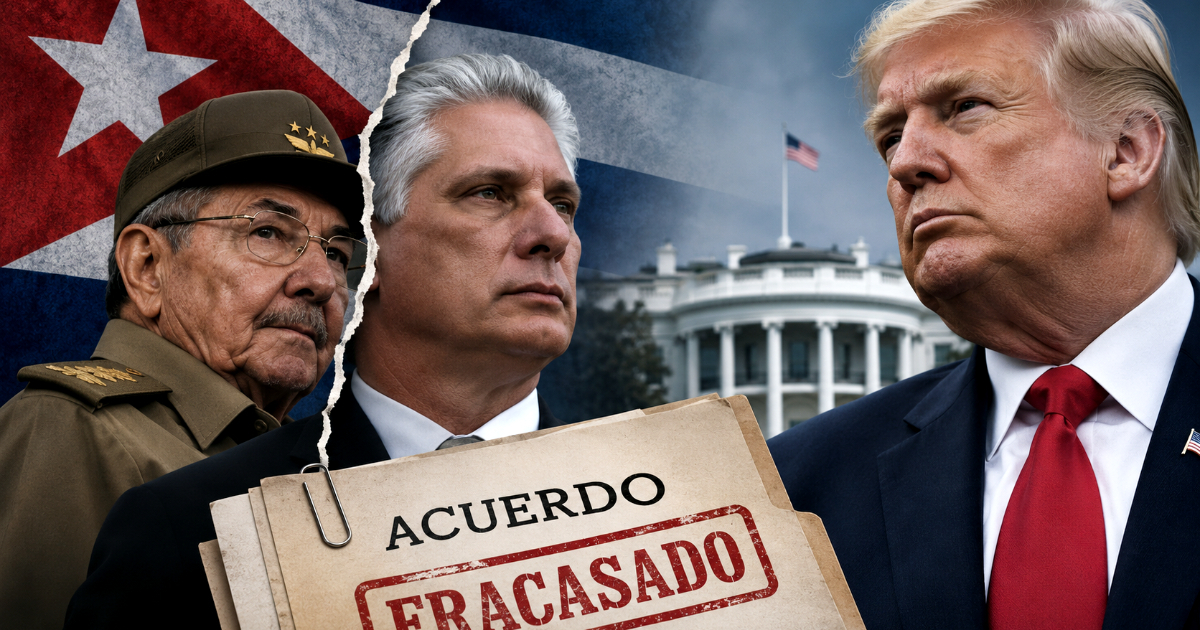
A negotiated agreement with relatives of Raúl Castro to force Miguel Díaz-Canel out of power was nearly finalized but ultimately failed due to strong opposition from certain factions within the Castro regime to reach an accord with the administration of Donald Trump, as reported by the Spanish journalist David Alandete, an accredited correspondent at the White House.
In his program The Alandete Report, published this Sunday on the ViOne channel on YouTube, the journalist discussed the negotiations between Washington and Havana, their internal obstacles, and the change in U.S. strategy following the breakdown of the agreement.
There was an agreement that was almost finalized, they were about to force Díaz-Canel's departure, stated Alandete, who explained that the discussions involved family members of Raúl Castro, but faced strong resistance within the Cuban power structure, particularly among those who opposed any deal with Trump or the Secretary of State, Marco Rubio.
Opposition from certain sectors of the Cuban exile community in Miami also emerged, opposing any understanding that might ensure the continuity of the Castro power structure in exchange for sidelining Díaz-Canel.
The correspondent's statements align with the findings of an investigation published in September by The Miami Herald, which revealed the existence of a U.S. proposal to provide oil and investments to Cuba in exchange for the departure of the ruler and the privatization of the state-owned company CUPET.
According to that research, one of the main interlocutors was Raúl Guillermo Rodríguez Castro, known as "El Cangrejo," the grandson and personal assistant of Raúl Castro. Havana's reservations about the economic and political conditions, along with pressures from Miami, prevented the initiative from succeeding.
From the failed agreement to pressure on the regime
For Alandete, the failure of that negotiated pathway explains the subsequent hardening of Washington's strategy, which shifted from seeking a negotiated exit for Díaz-Canel to increasing the economic and political isolation of the regime.
Trump has chosen to cut the aid that Venezuela provided to Cuba, isolating it even more, increasing pressure, and seeking change from within, stated the correspondent.
This interpretation places the current economic and diplomatic blockade within a strategy aimed at provoking changes in the Cuban power structure itself, after talks with Raúl Castro's circle failed to produce the political transition that Washington was seeking.
Will Trump's strategy change after the Republican defeat?
Alandete's statements come after the decisive Democratic victory in the legislative elections on November 3, which gave the party control of both chambers of the U.S. Congress starting in January 2027.
The outcome has been interpreted by pro-government sectors in Cuba as an opportunity to resist until the end of Trump's term. The platform Razones de Cuba even portrayed the U.S. president as a "lame duck", politically weakened and with reduced ability to enforce his agenda.
However, Alandete believes that the new balance of power in Congress will not substantially change Washington's plans for Cuba and Venezuela.
Although the Democrats will be able to exercise more intense parliamentary oversight, investigate executive decisions, and block legislative initiatives, President retains significant powers regarding foreign policy, sanctions, and national security.
Regarding Venezuela, the journalist argues that the new scenario will not compel Trump to abandon his strategy. "Trump is not someone who is very inclined to make radical changes in response to external demands; on the contrary, he is quite stubborn in his policy," he stated.
The correspondent also warned about the political calculations of those who hope that time and Trump's electoral fatigue will allow for a restoration of previous relations with Washington. As he explained, the interim president of Venezuela, Delcy Rodríguez, would be betting on buying time until the departure of the U.S. president, a strategy he considers comparable to that of Castro's regime.
At the same time, Alandete noted that U.S. presidents tend to focus on international issues during the final stage of their terms, a trend that, in his view, could keep Cuba and Venezuela among Trump's priorities over the next two years.
Related videos:
Filed under: