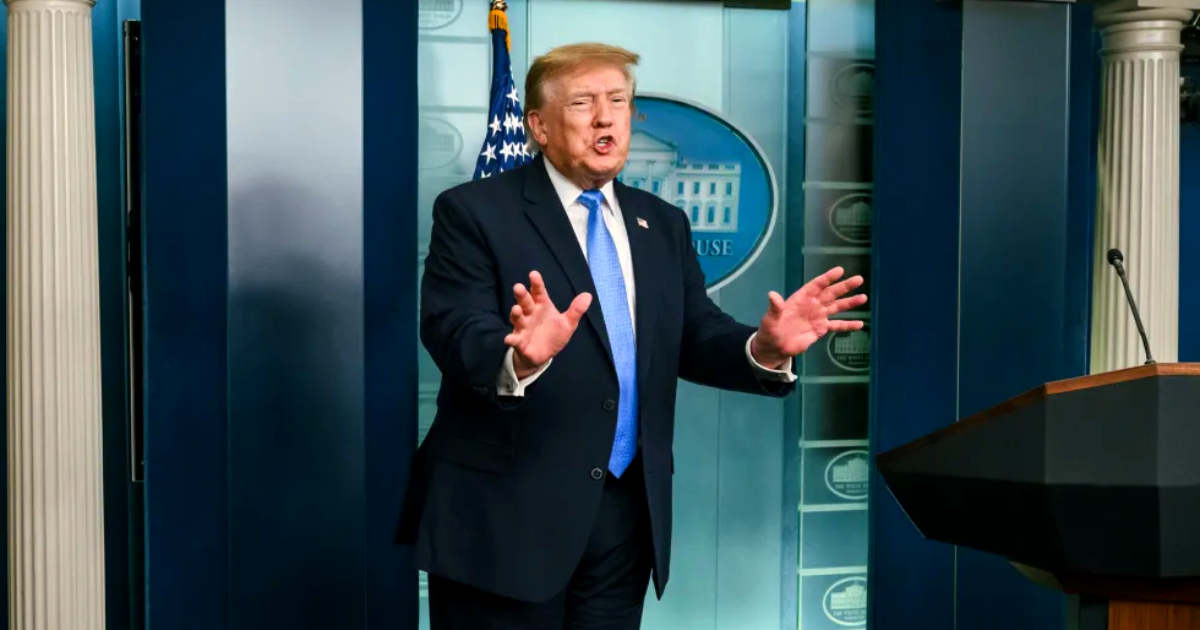
The Democratic victory in the legislative elections on November 3 does not mean that Donald Trump has lost control of U.S. foreign policy.
Although the new Congress will be able to oversee the Executive, condition budgets, and obstruct certain decisions, the president will retain broad powers to act on the international stage during the remaining two years of his term.
This is one of the main conclusions of an analysis published at the beginning of November by the Council on Foreign Relations (CFR), an influential American think tank specializing in international relations, which gathered insights from nine experts on the implications of the Democratic victory in both chambers.
Specialists agree that the new balance of power will complicate Trump's agenda, particularly regarding budgetary, trade, and military issues. However, they emphasize that the Democrats do not have the necessary majorities to override a presidential veto on their own, which limits their ability to reverse the policies of the White House.
The new Congress will assume its duties on January 3, 2027. From that point on, the Democrats will chair legislative committees, be able to convene investigations, demand documents, and scrutinize the actions of the administration.
They will also oversee the Senate's decisions regarding the confirmation of high-ranking officials and diplomats, while both chambers will have the ability to condition the funding of military, diplomatic, and foreign aid programs.
Trump could focus even more on foreign policy
One of the most significant observations comes from Liana Fix, a senior fellow at CFR specializing in Europe.
The expert believes that the Democratic victory does not guarantee an immediate improvement in relations between the U.S. and its European allies or with Ukraine. On the contrary, she suggests that Trump could focus even more on international matters during the second half of his term.
In particular, it warns about the possibility that the president may attempt to consolidate his legacy through an agreement to end the war in Ukraine, even under unfavorable conditions for Kiev.
The weakening of its ability to drive internal reforms could enhance the prominence of foreign policy on the presidential agenda, a possibility also considered by Elisa Ewers, a specialist in the Middle East.
Ewers notes that the restrictions imposed by the new Congress could coincide with a more adventurous international stance from Trump, precisely when his room for maneuver in domestic affairs is diminished.
Iran, under increased scrutiny from Congress
The war with Iran seems to be one of the main points of confrontation between the White House and the new legislative majority.
According to Ewers, the Democrats could promote investigations into the conduct of the war, demand accountability for its consequences, and propose initiatives aimed at ending U.S. military operations or limiting future interventions.
The specialist, however, recalls that these initiatives would require some Republican support to overcome presidential resistance.
Rebecca Lissner, the principal investigator of U.S. foreign policy at the CFR, links the electoral outcome to the rejection of numerous voters of the war with Iran and the trade tariffs, whose economic effects have contributed to the administration's decline.
In their opinion, concerns about the cost of living have taken on a significant role in the public's assessment of international politics.
Tariffs and sanctions: presidential power continues
The economist Pierre Yared, who worked on the Council of Economic Advisers at the White House during the second Trump administration, believes it is unlikely that a change in legislative majority will, by itself, alter the tariff policy.
It explains that the president exercises a significant part of these powers through authorities previously delegated by Congress. To withdraw or restrict them in the face of a presidential veto, a two-thirds majority in both chambers would be required.
On his part, Sam Vigersky, a specialist in humanitarian aid, also does not expect the administration to voluntarily reverse its decisions regarding foreign assistance.
The new Congress could investigate the actions of the Executive, increase oversight, and condition future budget allocations, but it may not necessarily restore the dismantled programs immediately.
Further investigations into the Pentagon
Democratic oversight will also usher in a period of greater scrutiny over the Department of Defense.
Michael C. Horowitz, director of the Defense and National Security program at the CFR, anticipates investigations into military contracts, decisions made by the Secretary of Defense, Pete Hegseth, operations against vessels off the South American coast, and the U.S. military campaign in Iran.
Lawmakers could also question Trump's priority projects, including the Golden Dome missile defense system and the Golden Fleet naval initiative, particularly due to their costs and outcomes.
The combination of increased legislative oversight and the persistence of extensive executive powers thus creates a scenario of institutional confrontation, but not an automatic paralysis of U.S. foreign policy.
In the case of Cuba, although the CFR report does not specifically examine Washington's strategy towards Havana, its conclusions help to understand why the Democratic victory does not necessarily mean the abandonment of U.S. pressure on the Cuban regime.
Sanctions, diplomacy, and specific national security decisions continue to largely depend on the Executive branch, while any potential military operation would be subjected to more complex legal, budgetary, and political constraints.
The first test of the new relationship between the White House and Capitol Hill will come in early 2027, when Democratic majorities begin exercising their oversight, funding, and confirmation powers for senior positions.
Related videos:
Filed under: