
Related videos:
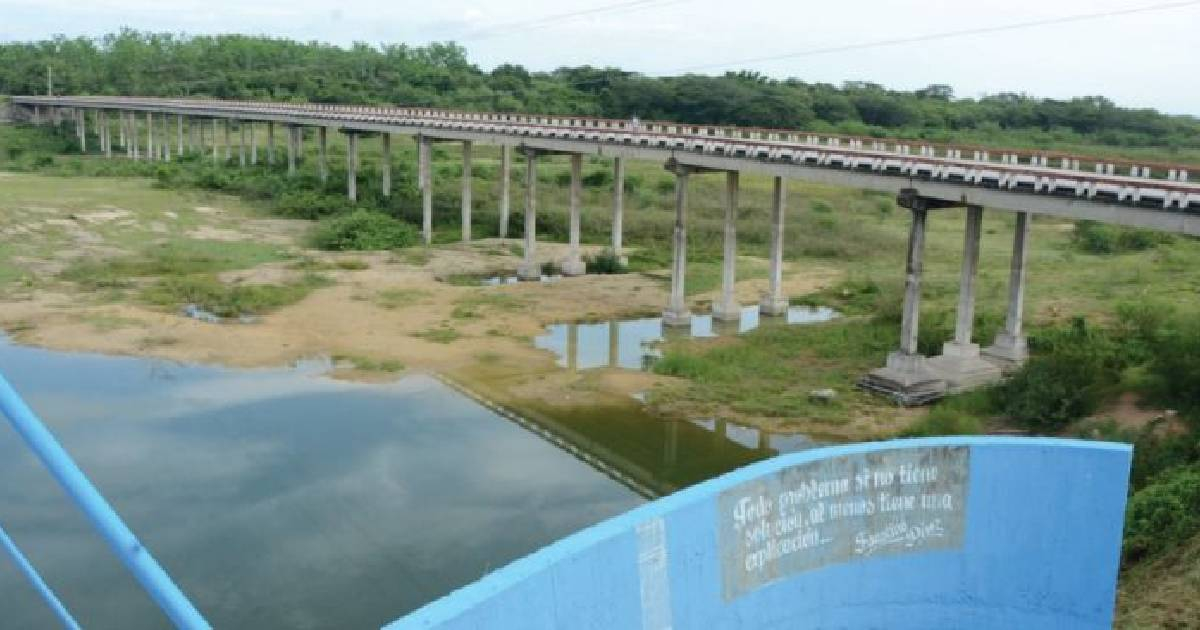
The recently concluded wet period in Sancti Spíritus barely reached 66.6% of historical rainfall, making it the driest in the last decade and leaving the province with severely depleted reservoirs.
Specialists classified the rainy season as "moderately dry" in the central province.
The behavior of rainfall between May and September accounts for much of the deterioration, as no month exceeded 85% of the historical average.
October was the exception, surpassing the average with 110.7 percent and becoming the rainiest of the decade, highlighted the official newspaper Escambray.
Nevertheless, the temporary improvement did not compensate for the overall deficit. The municipalities of Fomento, Trinidad, Taguasco, and Yaguajay were the most benefited, although they did not reach 90% of their usual accumulations.
At the opposite end, La Sierpe, Cabaiguán, and Sancti Spíritus were severely affected by the drought.
The provincial summary from January to October shows only 853 millimeters of rainfall, equivalent to 64.3% of the average, which confirms a yearly trend that is also "moderately dry."
The consequences are already being felt acutely in the reservoirs, which are storing less than 35% of their total capacity.
The Zaza Dam, the largest in the country with a capacity of 1,020 million cubic meters of water, currently holds less than 265 million cubic meters, approximately 26% of its storage volume.
Other aquifers such as La Felicidad and Dignorah also remain depressed, with 27% and 31%, respectively.
Only Tuinucú, Higuanojo, and Banao dos present a somewhat more favorable state, while Aridanes stands out as the exception, relieving water at this moment.
The outlook confirms that the province is facing the spring drought (from November to April) with reserves at their limit and without clear signs of a rainfall recovery that could reverse the trend.
At the beginning of September, the Zaza Dam, had only accumulated 106.4 million cubic meters of water, equivalent to 12% of its designed capacity, marking the second-lowest level in its history.
Furthermore, the residents of the capital municipality of Sancti Spíritus reported receiving cloudy water, with an unpleasant odor and the presence of insects, a situation acknowledged by the authorities and attributed to the drought and issues with supply sources.
Also, in mid-September, it was reported that more than three million Cubans were suffering from a total or partial lack of water across the entire country, according to official data.
Hurricane Melissa, although it left destruction in its wake as it passed through eastern Cuba at the end of September, also caused an unprecedented event: the Protesta de Baraguá reservoir in Santiago de Cuba reached its highest historical water accumulation.
The rains from the meteor left the province of Guantánamo with nearly full water reserves, but with a fragile supply system that is unable to restore service to thousands of residents affected by power outages and high turbidity in the rivers.
Filed under: