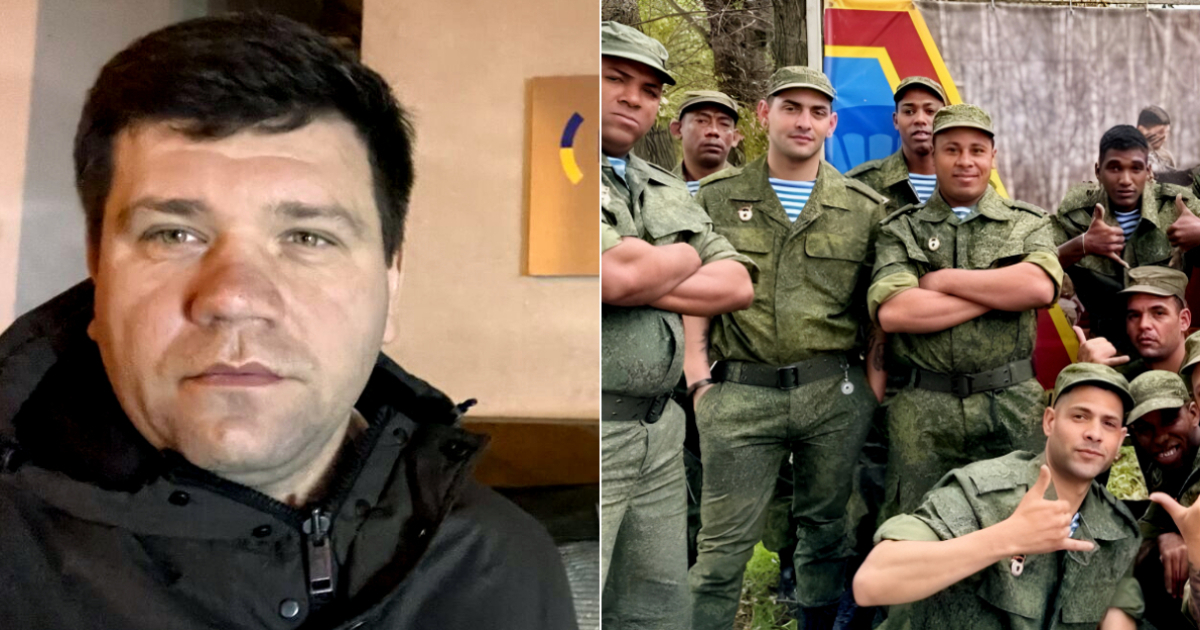
Ukraine claimed this Monday before the United Nations the cessation of the recruitment of Cuban citizens to fight in the ranks of the Russian Army and the release of those who remain linked to military service against their will, in a new accusation regarding the involvement of foreigners in the invasion ordered by Vladimir Putin.
The call was made by Volodimir Pavlichenko, Deputy Permanent Representative of Ukraine to the UN, during the meeting titled «Cuba Libre: the oppression hidden by Havana», organized by the U.S. mission in New York, on the eve of the annual vote on the embargo against Cuba.
The diplomat stated that Ukrainian authorities have documented more than 1,000 contracts signed by Cuban citizens with the Russian armed forces between 2023 and 2025, although he warned that the identified cases represent only a portion of those who may have been recruited into the conflict.
According to the explanation, Cubans are among the four largest national groups within the foreign recruitment carried out by Moscow. Ukraine estimates that around 20,000 citizens from 47 countries have joined the Russian forces, a figure that includes various nationalities and should not be confused with the number of Cubans.
Pavlichenko pointed out that the economic conditions of the Island make it easier to recruit fighters. Job offers with salaries close to 2,000 dollars per month, an amount far greater than the usual income in Cuba, represent a strong incentive for people looking to escape precariousness.
However, he warned that this vulnerability cannot be used to justify the exploitation of foreign citizens or their involvement in an act of aggression.
The Ukrainian representative called for an end to both the recruitment and deployment of Cubans at the front, and demanded the release of those who remain illegally detained in the Russian military.
Contracts, deaths, and reports of deceit
Pavlichenko's statements add to a series of investigations and reports that have emerged over the past few years regarding networks that transport Cuban citizens to Russia to incorporate them into its armed forces.
In September 2025, Ukrainian military intelligence reported the identification of 1,038 contracts of Cuban citizens, while managing much broader estimates regarding the possible scale of recruitment.
One month later, Kiev reported 1,076 Cubans identified among the Russian ranks and 96 deceased, according to data released at that time by Ukrainian authorities and gathered by CiberCuba. These figures correspond to records from that period and do not represent an updated tally of victims.
Investigations have revealed recruitment mechanisms that include promises of employment, high salaries, immigration facilitation, and the possibility of obtaining Russian citizenship.
In September 2026, Amnesty International documented testimonies from foreigners, including Cubans, who reported being deceived into joining the Russian Army. Some claimed they traveled lured by job offers and ended up sent to the front lines, without fully understanding the signed contracts or having effective mechanisms to leave the service.
These cases require a distinction between those who voluntarily agreed to enlist and those who may have fallen victim to deceit, coercion, or abusive recruitment practices.
The position of Havana on recruitment
The Cuban regime has repeatedly denied its involvement in sending fighters to Russia and claims that it is not part of the war in Ukraine.
In September 2023, authorities announced the dismantling of an alleged human trafficking network linked to recruitment for the Russian Army and the arrest of 17 individuals. However, subsequent complaints from Kiev have kept the questions open regarding the persistence of these networks and Havana's ability or willingness to prevent their operation.
The controversy gained greater international significance when the Ukrainian president, Volodimir Zelenski explicitly mentioned Cuba during his speech at the United Nations General Assembly in September 2026, while condemning the recruitment of foreign citizens into Russian forces.
The complaint is not reaching the United Nations for the first time. During the debate on the embargo in October 2025, Washington already used the recruitment of Cubans by Russia as an argument to urge other governments to vote against the Havana resolution or to abstain.
The diplomatic offensive was supported by the U.S. Trafficking in Persons Report, which that year included the fraudulent recruitment of Cuban citizens to fight in Ukraine among the allegations of trafficking linked to the regime.
The 2026 report, published on October 8, reiterated the assertion and included testimonies from Cubans lured by false job offers in Russia and subsequently coerced into joining the military.
Havana has rejected the accusations of state complicity and maintains that those who participated in the conflict did so on their own initiative.
Pavlichenko's new statements bring the matter once again before the international delegations, this time at a meeting organized by Washington to challenge the responsibilities of the Cuban regime and diminish support for its annual resolution against the embargo.
Before giving the floor to the Ukrainian diplomat, the U.S. Ambassador to the UN, Mike Waltz, also denounced the presence of Cubans within the Russian ranks and noted that some had been lured through deceit, while others accepted offers of money and opportunities.
Ukraine's involvement thus introduced an international dimension to the debate about Cuba: in addition to the denunciations of political repression and economic deterioration within the Island, it brought to the forefront the consequences of emigration and the vulnerability of Cuban citizens recruited for a foreign war.
Pavlichenko concluded her intervention by demanding that Cubans be protected from exploitation in the conflict and be allowed to build a future based on freedom and dignity, rather than ending up used as combatants in someone else's war.
Related videos:
Filed under: