
Related videos:
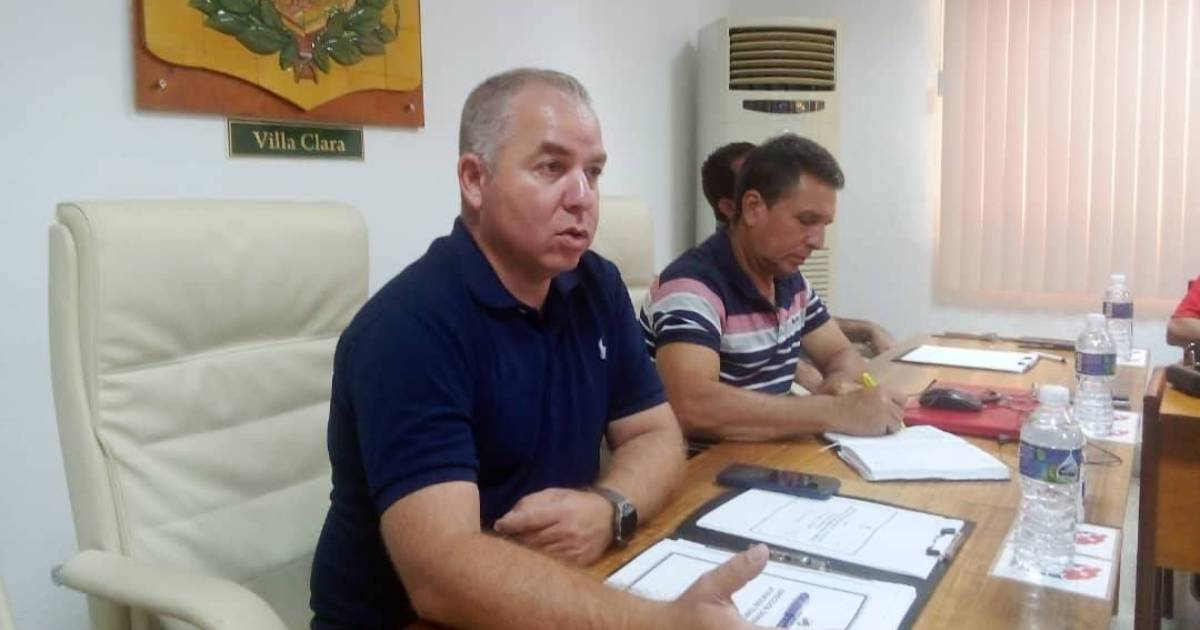
The Minister of Finance and Prices of Cuba, Vladimir Regueiro Ale, traveled to Santa Clara to highlight that the province has a surplus in its accounts and a “potential for development” that, he claimed, would allow for the promotion of local projects without the need to issue more money, a measure that, he stated, would worsen inflation and national imbalances.
The visit, reported by the official media Telecubanacán and Estereocentro, emphasized presenting an image of favorable financial management in a territory that, according to the minister, could become an example of efficient administration.
Regueiro assured that this surplus will allow “investment in projects that improve the lives of the people of Villa Clara,” and that the key is to redistribute resources with transparency and citizen participation.
He also mentioned sectors with "great potential yet to be harnessed" such as tourism, agriculture, and local industry, which could become engines of economic revitalization if leveraged with creativity and innovation.
According to a report by Telecubanacán, Regueiro also warned about the urgency to better manage revenue collection, including fines and tax debt, while searching for new strategies to raise funds amidst the ongoing rise in prices.
The minister acknowledged that, despite the positive results in Santa Clara, much still needs to be done for that surplus to translate into true sustainable growth for the regions.
A contrast with the reality of the country
The optimism displayed in Santa Clara contrasts sharply with the national landscape of hardship that millions of Cubans are experiencing. While the minister spoke of surpluses and “great potential,” the country is facing blackouts of up to 13 hours, inflation exceeding 500%, shortages of basic food items, and a crisis that many economists compare to, and even consider worse than, the Special Period.
Recent reports confirm that the Cuban economy contracted by 1.1% in 2024 and that the accumulated decline since 2019 exceeds 11%. The CEPAL has predicted another two years of contraction or stagnation, with a negative GDP in 2025 (−1.5%) and a mere 0.1% growth in 2026.
In parallel, the energy crisis has worsened with the electricity deficit hovering around 1,725 MW, which leaves entire neighborhoods without power for entire days, paralyzing production, affecting daily life, and increasing the despair of the population.
However, in the face of the collective experience of precariousness, the words about surplus in Santa Clara take on a tone of official propaganda, rather than offering tangible relief to a population battered by inflation, blackouts, and a lack of future prospects.
Frequently Asked Questions about the Surplus in Santa Clara and the Economic Crisis in Cuba
What does the surplus that the Finance Minister highlighted in Santa Clara mean?
The surplus in Santa Clara refers to an excess in the province's accounts, which, according to Minister Vladimir Regueiro Ale, could be used to promote local projects without the need to print more money. This is regarded as an example of efficient management within the current Cuban context.
How does the economic situation in Santa Clara contrast with the rest of Cuba?
While Minister Vladimir Regueiro Ale boasts of a surplus and "development potential" in Santa Clara, Cuba is facing a severe economic crisis at the national level. The country is experiencing power outages of up to 13 hours, an inflation rate exceeding 500%, and a shortage of food and basic goods, which sharply contrasts with the optimism shown in the province.
What sectors does the Cuban government identify as potential economic engines in Santa Clara?
The Cuban government mentions tourism, agriculture, and local industry as sectors with great potential in Santa Clara. According to the Minister of Finance, these sectors could be engines of economic revitalization if harnessed with creativity and innovation.
What is the general economic situation in Cuba according to recent reports?
Recent reports, such as those from CEPAL, indicate that the Cuban economy has been in free fall, with a contraction of 1.1% in 2024 and a projected decline of 1.5% in 2025. Moreover, the country is facing chronic inflation, a significant energy deficit, and a decline in key sectors such as tourism and agriculture.
Filed under: