
Related videos:
The municipality of Santiago de Cuba is facing a critical situation, as the approximately 500,000 residents there are confronted with the most intense drought in 10 years, with reservoirs at minimal levels and water distribution cycles that often exceed 30 days, amid accumulated failures in the hydraulic system.
The supply situation in the main municipality has been described as “alarming” even by the authorities, who acknowledge the seriousness of the crisis.
The lack of rainfall is not the only cause: unaddressed leaks, broken equipment, electrical shortages that hinder continuous pumping, insufficient water trucks, and disproportionate cycles have multiplied the discomfort among residents, stated the official newspaper Sierra Maestra.
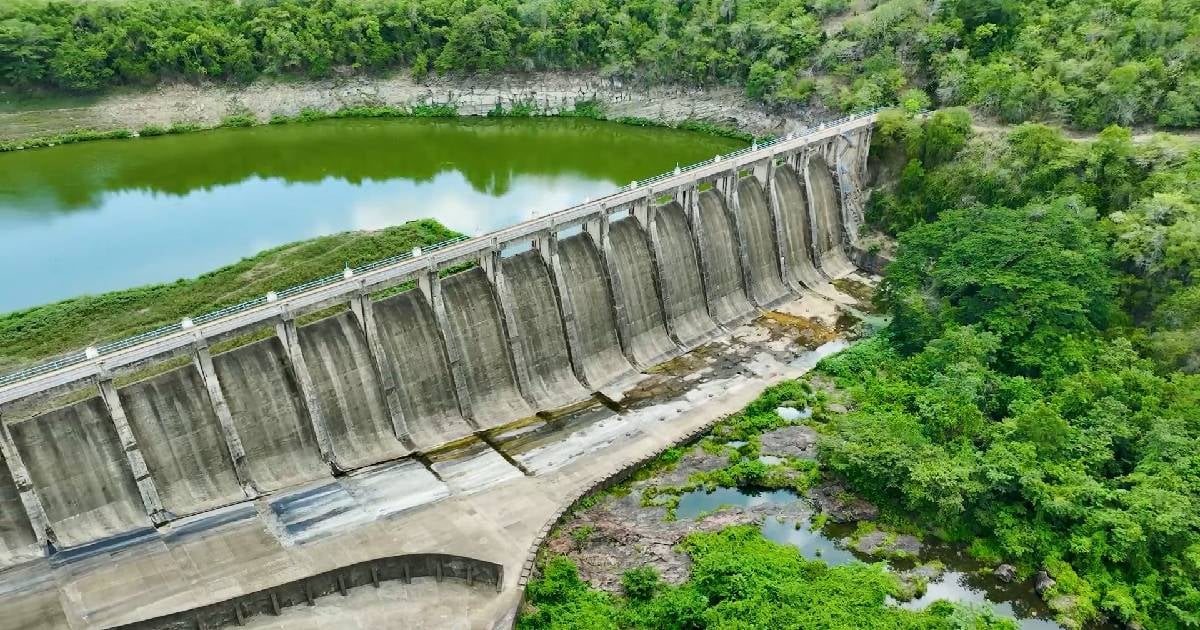
The reservoirs supplying the city show depressing levels: Charco Mono is at 8.8% of its capacity, Gilbert at 13%, Parada at 16%, Gota Blanca at 18.3%, and Chalons barely reaches 31.4%.
To alleviate the crisis, water is being transferred from the Carlos Manuel de Céspedes dam, located dozens of kilometers away, which is 68.5% full, according to official data.
The institutional response has been slow and insufficient. According to the news outlet, the first secretary of the Party Beatriz Johnson Urrutia, and the governor Manuel Falcón Hernández, are leading the rehabilitation efforts with the support of the central Government.
But citizen testimonies describe a reality of long waits and exorbitant prices: in Chicharrones, for instance, residents report not having water for four months and being forced to pay 400 pesos for just 20 liters.
In other neighborhoods, the resource arrives intermittently or only through tank trucks. Some delegates admit that for months, distribution focused on prioritizing vulnerable families, while the majority remained unattended.
For those who rely on water tanks, each cycle can take more than a month, and even then it is not enough to meet basic needs.
The problem worsens with the precarious state of the infrastructure. Out of the 106 pumping facilities, only 19 have emergency generators, and the deficit in the National Electric System constantly interrupts the pumping process.
Although wells with solar panels and new equipment in key plants are being announced, the results still do not alleviate public despair.
Reports of leaks, waste, and negligence are constant. Residents talk about leaks that have gone unrepaired for months, damaged streets, and entire communities that have not received service. Even those who pay for consumption claim that they only see the collectors once a year, without receiving water regularly.
The company Aguas Santiago claims that it has recovered part of its fleet of trucks—17 out of about 30—thanks to external support, and investments in pumping stations, wells, and desalination plants are being announced.
However, the executives themselves acknowledge that the struggling Quintero System, which supplies 80% of the city, is operating at only 50% of its capacity.
Beyond promises and technical plans, the root of the problem remains the lack of water in natural sources and the accumulated deterioration of a system that does not meet the actual demand of the population.
Meanwhile, the perception of institutional sluggishness is growing, along with a lack of official communication and insufficient control over irregularities such as the use of private turbines, which worsen inequalities in access.
The official discourse stresses the urgency and need to save, but daily life in Santiago de Cuba presents a different picture: families without water for weeks, entire neighborhoods buying what little they can find at exorbitant prices, and a population that continues to wait for real solutions amid the worst drought in a decade.
At the end of August, during a regular television report on the state of water resources, Master Argelio Fernández informed, amid technical jargon and circumlocutions, that more than 884,000 people in Cuba were experiencing “restrictions” in the supply of this vital resource.
But instead of discussing "crisis," "emergency," or even "shortage," he chose a gem from official semantics: "tendency towards increased impacts due to low availability", which translates to more and more people are without water each day.
More than 90,000 people in the city of Las Tunas have difficulties regularly accessing water in their homes, especially in the higher areas of the urban landscape, where the pressure never reaches the residences.
The Zaza Dam, the largest reservoir in Cuba, holds only 106.4 million cubic meters of water, which represents just 12% of its designed capacity of 1,020 million cubic meters, placing it at the second lowest point in its history.
In contrast, in Ciego de Ávila, 30% of the water is lost due to deteriorated pipes, complicating a supply situation that already has cycles lasting nine days.
Frequently Asked Questions about the Drought in Santiago de Cuba
How many people are affected by the drought in Santiago de Cuba?
In Santiago de Cuba, more than half a million people are affected by the worst drought in a decade. The water shortage has extended distribution cycles to over 30 days, causing significant distress among the population.
What are the main causes of the water crisis in Santiago de Cuba?
The lack of rainfall, the deterioration of the hydraulic infrastructure, failures in the electrical system, and the insufficiency of trucks for distribution are the primary causes of the water crisis in Santiago de Cuba, where the reservoirs are at historically low levels.
What measures is the government taking to address the drought in Santiago de Cuba?
The government has implemented emergency measures such as transferring water from more distant reservoirs, improving the pumping system, and incorporating solar panels. However, the institutional response has been slow and insufficient, according to criticism from the affected population.
How is the drought affecting the most vulnerable communities in Santiago de Cuba?
Vulnerable communities are facing severe challenges, with distribution cycles exceeding 60 days in some cases. Irregular distribution and excessive charges for water trucks have worsened the situation, forcing many families to pay exorbitant prices for small amounts of water.
Filed under: