
Related videos:
A troubling statement from the Cuban diplomat Johana Tablada de la Torre raised concerns about the internal climate on the island: “I have no doubt,” she said when asked about the potential distribution of weapons to the population in the event of a conflict with the United States.
Although she claimed not to have concrete details, in statements to El Sol de México, the official described the existence of organizational structures within the country prepared for war scenarios.
According to what was explained, in Cuba there are mechanisms where the population knows "where to go" in case of an attack, including production and defense brigades.
Such statements reinforce the regime's narrative of a constant threat, historically used to justify the militarization of society and citizen control.
However, the lack of transparency and the absence of verifiable information raise concerns about the true extent of these measures.
The statements made by Tablada do not occur in a vacuum. They take place during a time of heightened political, economic, and military tension, characterized by a sustained increase in pressure from the administration of President Donald Trump on the Cuban regime.
In recent weeks, high-ranking officials in Washington and President Trump himself have intensified an unusually harsh discourse, going so far as to label Cuba a “failed state” and emphasizing the need for profound changes in its political system.
These statements have been accompanied by measures that reinforce the energy siege, worsening the already critical fuel shortage and causing prolonged blackouts throughout the island.
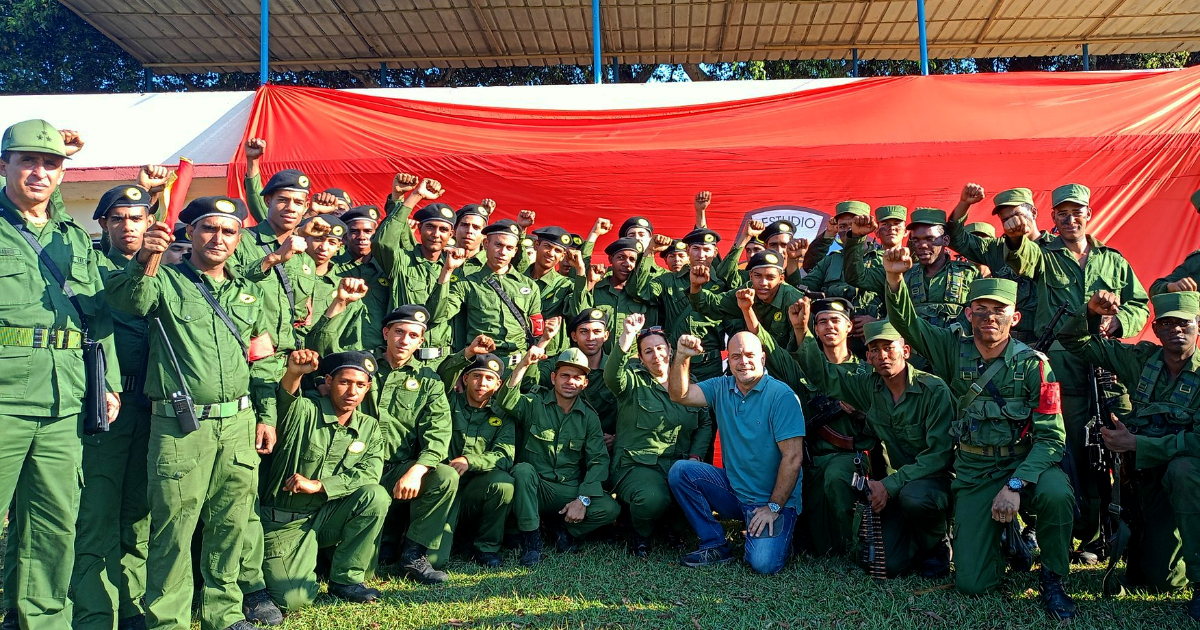
In parallel, the regime has responded with an escalation in its rhetoric and internal preparation. There has been an increase in military maneuvers by the Revolutionary Armed Forces (FAR), along with the reactivation of exercises known as “Saturdays of Defense”, aimed at preparing the population for confrontation scenarios.
On their part, state media have , a historical doctrine that calls for widespread mobilization in the event of conflict.
This situation arises while the country is experiencing one of the worst crises in its recent history, marked by widespread shortages, rampant inflation, and an unprecedented migration exodus.
Alongside the public confrontation, there have also been reports of contacts and alleged discreet negotiations among regime figures —including members of the Castro family— and actors in the United States, suggesting that, beyond the official rhetoric, Havana may be exploring political options or guarantees in the face of a potential transition scenario.
Analysts indicate that this type of discourse also aims to unify sectors aligned with the regime and convey a message of strength in the face of international pressure. However, opponents warn that it could serve as justification to reinforce repressive mechanisms in the event of internal protests, as was the case following the social unrest on July 11, 2021.
The international community watches these types of statements with caution, at a time when regional stability is crucial. Meanwhile, within the island, fear comes not only from an external threat but also from uncertainty about how the state itself may act towards its population.
Filed under: